As drones become a standard tool in precision agriculture, the real differentiator is no longer the airframe or sensors, it’s the software platform that defines how missions are planned, executed, and scaled.
A mission-centric drone software platform transforms agricultural drones from isolated tools into repeatable, scalable systems. Below are the 05 most important benefits this approach delivers.
1. Reusable missions across fields and fleets
Instead of building flight logic for each individual drone or farm, switching back and forth to integrate with different hardwares, a mission-centric platform allows teams to define agricultural missions once and reuse them across:
- Different crop types
- Multiple farms and regions
- Various drone hardware configurations
This dramatically reduces setup time and enables faster seasonal deployment without re-engineering workflows.
2. Hardware independence and flexibility
Agricultural operations rarely rely on a single drone model forever. Hardware evolves, sensors change, and fleets expand. While a drone software platform abstracts hardware differences by:
- Separating mission logic from flight controllers
- Supporting mixed fleets with consistent behavior
- Allowing hardware upgrades without rewriting software
This flexibility protects long-term investment and avoids vendor lock-in.
3. Consistent, high-quality data collection
Precision agriculture is not driven by single observations. It relies on patterns, trends, and comparisons across time.
A soil moisture reading, crop health image, or yield estimate only becomes useful when it can be compared against previous states. Without reliable data over time, the system cannot distinguish between:
- Normal seasonal variation and actual stress
- Short-term anomalies and persistent problems
- Effects caused by weather versus effects caused by management decisions
Inconsistent data breaks these comparisons. Most agricultural decisions, irrigation scheduling, fertilizer application, pest control, and harvest timing, are cumulative decisions. They depend on understanding how conditions evolve, not how they look at a single moment.
When data collection methods change, sensors drift, or coverage gaps occur, historical continuity is lost. This reduces confidence in models and forces operators back to conservative, manual decision-making.
When missions are standardized:
- Flight paths, altitude, and sensing rules remain consistent
- Data becomes comparable across seasons and locations
- Long-term trends are easier to identify and analyze
This consistency turns raw drone data into actionable agricultural intelligence.

4. Safer and more reliable autonomous operations
A mission-centric platform enables simulation, validation, and monitoring before real-world deployment.
Key benefits include:
- Testing missions without risking crops or hardware
- Enforcing safety constraints automatically
- Reducing human error in repetitive operations
This is especially important for large-scale farms where manual supervision is limited.
5. Faster innovation and continuous improvement
By removing low-level integration work, teams can focus on:
- Improving crop analysis models
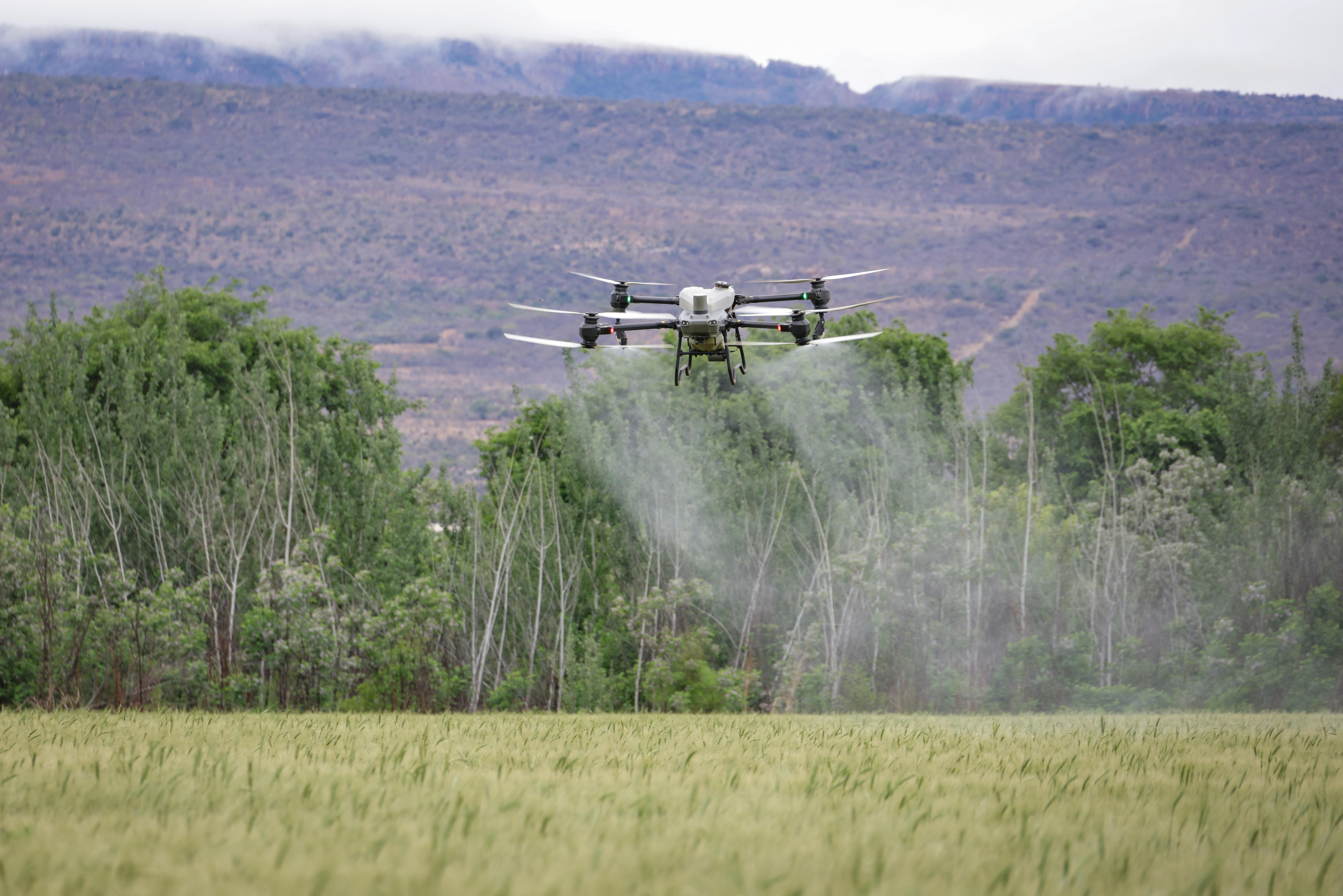
- Optimizing spraying and scouting strategies
- Experimenting with new autonomous workflows
Software platforms shorten the feedback loop between experimentation and real-world impact.
Why this matters long term
As drone hardware becomes more accessible, competitive advantage in agriculture will come from how well missions scale, not from flying a single drone.
A mission-centric drone software platform provides the foundation for:
- Scalable autonomy
- Cross-fleet learning
- Sustainable precision agriculture operations
This shift requires a software foundation built around missions, not machines, one that can coordinate fleets, learn across operations, and scale with real agricultural demands