UAV fleet operations software becomes critical when a team stops running one mission at a time and starts managing many missions across many aircraft, operators, and sites. A single successful drone flight can be coordinated through experience and manual attention. A growing operation cannot. Once missions become recurring, teams need centralized visibility, clearer workflow standards, and a better way to preserve mission consistency across every aircraft in the fleet. That is where fleet operations stops being a control problem and becomes an operating model problem. SkyTrack’s public product story fits this category closely, positioning the platform around Mission Studio, Device Onboarding, and Fleet Management for real-world autonomous missions.
For operators, system integrators, and builders, the value of UAV fleet operations software is not simply knowing where each aircraft is. The real value is turning a growing drone program into a coordinated, repeatable, and monitorable system. That means preserving mission logic across flights, creating operational consistency across teams, and building enough structure that scale does not create chaos. SkyTrack’s public positioning around mission-first development, centralized fleet operations, and support for growing teams reflects exactly that operational shift.
When one drone mission becomes a fleet problem
Single-flight success hides the real scaling challenge
A single drone mission can succeed with a surprising amount of manual coordination. One experienced operator can remember route assumptions, adapt to local conditions, and compensate for weaknesses in the workflow. That is why many UAV programs feel simpler in the early phase than they really are. The hidden difficulty emerges only when missions start repeating across more aircraft, more shifts, or more locations.
This is the point where drone fleet management software starts to matter. The challenge is no longer whether an aircraft can fly a route. The challenge is whether the organization can preserve mission quality when many flights are happening across a larger operational surface. Without a stronger software layer, the team usually scales flights faster than it scales discipline.
Growth creates coordination debt
Every time a program adds another aircraft, another operator, or another route, it increases the amount of coordination required behind the scenes. If the organization still depends on manual oversight and loosely defined mission practices, that growth starts to create coordination debt. Teams spend more time aligning who is flying what, under which assumptions, with which mission version, and how the outcome should be interpreted afterward.
That is why UAV fleet operations software should be seen as infrastructure, not just a monitoring screen. Its job is to reduce coordination debt by creating a more stable operational layer for multi-aircraft execution. The better the software handles that layer, the less the team needs to rely on memory, local habits, or ad hoc adjustments as scale increases.
What UAV fleet operations software should actually do
A multi-drone operations platform should coordinate more than aircraft status
A multi-drone operations platform should do much more than show aircraft status on a map. It should help the team understand how missions are distributed, how execution is progressing, where exceptions are appearing, and how the operation remains aligned with the original mission intent. This matters because status visibility without mission context still leaves the operator doing most of the real coordination work manually.
As a category, UAV fleet operations software becomes valuable when it keeps operations connected to shared mission logic. That means teams can track the health of the operation as a workflow, not only the location of individual aircraft. Once this becomes possible, scaling the fleet does not automatically mean scaling confusion.
Fleet control platform for UAV missions needs a mission layer
A fleet control platform for UAV missions should help preserve mission structure across repeated launches. That is important because real operations drift quickly when aircraft are managed as individual assets without enough workflow discipline above them. One crew may execute the route slightly differently, another may alter the timing logic, and another may improvise around a changing field condition. Over time, the program can still look active while becoming less consistent.
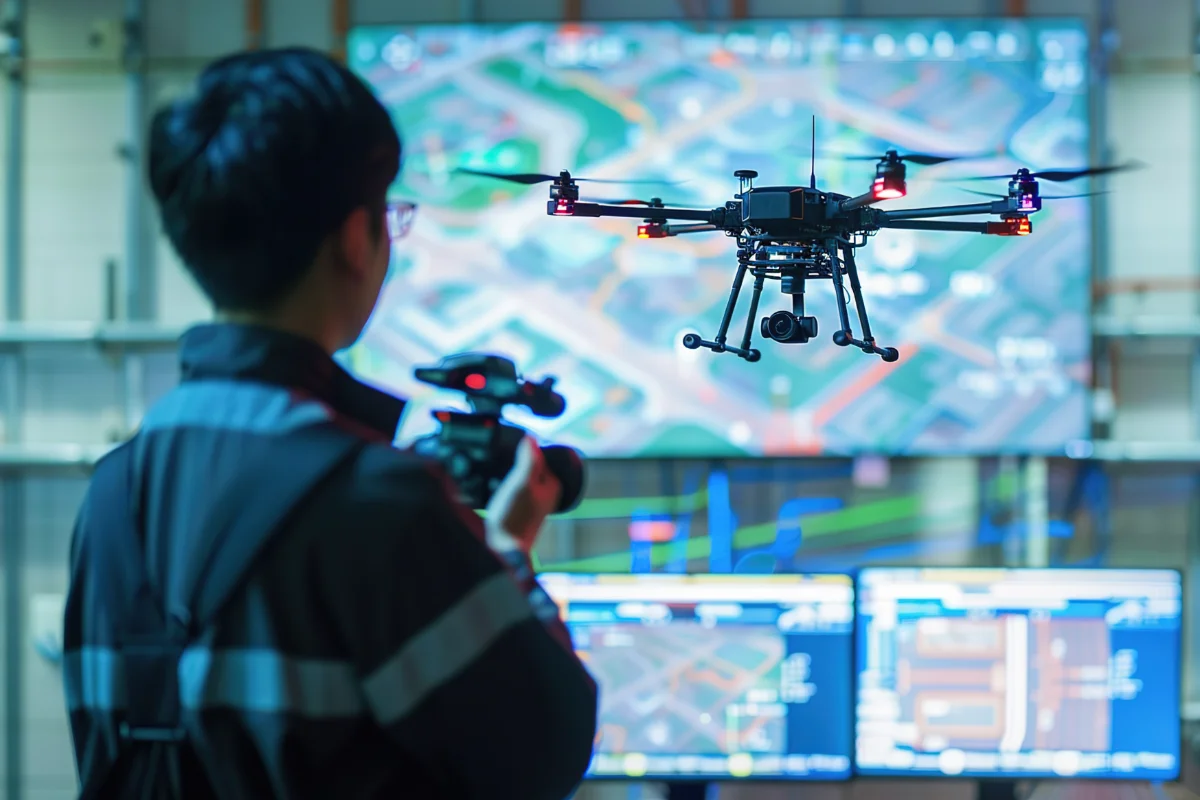
This is why a mission layer matters so much in fleet operations. The platform should make it easier to preserve route logic, review mission execution, and repeat the same operational pattern at higher scale. SkyTrack’s public framing of fleet management under a centralized hub fits this need directly by tying operations back to a broader mission-first architecture instead of isolating fleet management as a separate dashboard feature.
Fleet telemetry management is how teams see trouble early
Telemetry only becomes valuable when it is operationally useful
Fleet telemetry management is often treated as a data visibility problem, but the real question is whether telemetry helps the team act before mission quality degrades. Raw telemetry has limited value if it does not help operators understand drift, identify unhealthy patterns, or detect where repeated missions are starting to behave differently than expected.
That is why telemetry should be connected to operations, not left as a separate technical stream. In a strong UAV fleet operations software model, telemetry supports decision-making about mission execution, fleet health, route reliability, and exception handling. It becomes part of the workflow, not just a record of what happened after the fact.
Centralized visibility reduces delayed reaction
As fleets grow, delayed reaction becomes one of the biggest risks. A problem that would be obvious in a one-aircraft operation can remain hidden longer when many missions are active at once. Centralized visibility helps because it gives teams a cleaner view of what is normal, what is drifting, and where action is needed before small issues become repeated operational patterns.
This is why fleet telemetry management and drone fleet management software work best together. The software should not only collect information. It should help the organization see the fleet as one evolving mission system. That is the level at which visibility begins to improve operational outcomes rather than simply adding more data.
Autonomous fleet operations need more than automation
Autonomous fleet operations still need structure
Autonomous fleet operations can sound like the natural end point of UAV scale, but autonomy by itself does not create operational quality. A fleet can automate route execution and still suffer from weak mission discipline, inconsistent deployment standards, or poor visibility across aircraft and teams. That is why mature operations need more than automation. They need a framework for keeping automated behavior aligned with mission intent.
In practice, this means the software must support repeatability, not just autonomous movement. It should help teams understand what the fleet is supposed to be doing, whether the mission logic is still holding, and where intervention or correction is needed. This is the difference between autonomous activity and autonomous operations.
Mission consistency is the real scaling advantage
The biggest gain in autonomous fleet operations is not merely that more drones can fly at once. The bigger gain is that mission execution can remain more consistent as the program grows. A strong fleet operations platform helps preserve that consistency across aircraft, operators, routes, and sites, which is exactly what makes larger UAV programs more manageable over time.
This is where the category becomes strategically important. The software is not only helping a fleet move. It is helping the organization prevent the fleet from becoming fragmented into loosely related mission habits. That consistency is one of the hardest things to achieve manually, which is why the right platform matters so much.
How SkyTrack fits the fleet operations category
The platform connects design, onboarding, and fleet management
SkyTrack publicly presents its platform around three current core capabilities: Mission Studio, Device Onboarding, and Fleet Management. That matters because it places fleet operations inside a broader mission lifecycle rather than isolating it as a standalone control feature. The product also describes itself as an open platform to build and scale real-world autonomous missions across multiple vehicle types, with fleet operations framed as a shift from single-pilot execution to centralized management.
For a fleet-operations use case, this is strategically useful. It means the software is not only meant to support aircraft visibility after launch. It is meant to connect mission design, deployment readiness, and live operational oversight in one flow. That is exactly the kind of system teams need when one mission becomes many and the organization can no longer rely on informal coordination.
The current plan structure also reflects fleet maturity
SkyTrack’s pricing page reinforces this story by making fleet management part of the Builder plan for growing teams and serious projects, while the Scale plan is positioned for commercialized and mission-critical operation at scale. That signals that the company sees fleet operations as part of the path from early builder activity to larger real-world deployment, not as a separate enterprise-only concern.
Open Mission Studio and run a mission end-to-end at SkyTrack platform.
How to evaluate UAV fleet operations software before rollout
Start with one recurring operational workflow
The most useful way to evaluate UAV fleet operations software is to start with one recurring mission pattern that already matters. This could be a repeated inspection route, a corridor patrol, a response workflow, or a monitoring task that runs across multiple aircraft. The point is to see whether the software improves mission consistency, operator visibility, and repeated execution quality rather than only presenting attractive fleet screens.
This kind of evaluation reveals what the platform is actually doing. If the operation becomes easier to monitor, easier to repeat, and easier to coordinate as more aircraft join, then the fleet layer is delivering real value. If the team still carries most of the coordination burden manually, the platform may not yet be solving the operational problem it appears to address.
Measure disappearing friction, not only aircraft count
A weak evaluation focuses on how many drones the system can support. A stronger evaluation looks at how much friction disappears as the program grows. Are missions easier to repeat? Are route exceptions easier to spot? Is it easier to understand whether the fleet is aligned with mission intent? These questions reveal much more about the quality of the platform than a simple aircraft count does.
This is the right way to judge multi-drone operations platform value in practice. Strong systems reduce coordination drag, improve mission visibility, and make scale feel more structured. If something feels unclear or breaks your flow, drop feedback in Discord. That builder loop matters because real operational friction usually appears only after repeated missions expose the weak points in the workflow.
FAQs
What is UAV fleet operations software?
UAV fleet operations software is software that helps teams manage repeated drone missions across multiple aircraft with greater coordination, centralized visibility, and mission consistency. It becomes valuable when operations move beyond one-off flights and require repeatable workflows at larger scale.
How is drone fleet management software different from simple fleet tracking?
Drone fleet management software should go beyond showing aircraft location or status. Its stronger role is helping teams preserve mission structure, track execution quality, and understand whether repeated operations remain aligned with intended workflows. Tracking is useful, but true operations software should support mission-level coordination.
Why is fleet telemetry management important?
Fleet telemetry management is important because it helps teams detect drift, identify anomalies, and understand fleet behavior before small issues become repeated operational problems. Telemetry becomes most valuable when it supports decision-making rather than existing as raw data alone.
What does a multi-drone operations platform improve?
A multi-drone operations platform improves coordination across repeated flights, aircraft, and operators. It helps the organization monitor operations with more consistency and makes it easier to preserve mission intent as the fleet grows. That is especially important once multiple missions are happening at once.
Why do autonomous fleet operations still need mission consistency?
Autonomous fleet operations still need mission consistency because autonomy alone does not guarantee reliable execution. A fleet can automate movement and still become operationally fragmented if mission logic, route discipline, and visibility are weak. Mission consistency is what makes automation scalable.
Conclusion
UAV fleet operations software matters because scaling a drone program changes the nature of the problem. The challenge is no longer single-mission execution. It is coordinated, repeatable, and monitorable operations across many aircraft. Strong drone fleet management software, a capable multi-drone operations platform, useful fleet telemetry management, reliable autonomous fleet operations, and a mature fleet control platform for UAV missions all contribute to the same goal: turning a growing fleet into one coherent operational system. When one mission becomes many, that operating system is what keeps the program scalable, visible, and consistent.