
An OEM robotics integration platform matters when hardware partners need more than a working device demo. For most OEMs, the real commercial challenge is not proving that the hardware can move, sense, or connect. It is turning that hardware into a deployable mission system that partners and end customers can use repeatedly without rebuilding the same software logic for every integration. SkyTrack’s public product story fits this category closely: it presents an open platform to build and scale autonomous mission-based applications, highlights open integration with hardware vendors and cloud services, and structures the product around Mission Studio, Device Onboarding, and Fleet Management.
That framing is important because it shifts the category away from device connectivity alone. A strong OEM robotics integration platform should help partners accelerate integration readiness, preserve reusable mission logic, and reduce repeated partner-side engineering. SkyTrack’s public messaging around “design once and deploy across hardware,” plus its compatibility references to PX4, ArduPilot, ROS, MAVLink, and QGroundControl, point directly at that mission-first, partner-enablement model.
Why OEM integration is usually slower than the hardware roadmap
Hardware is only half of the deployment problem
Many OEMs can get a device technically ready before they get it operationally ready. The aircraft, robot, payload, or controller may already work, but partners still need a software layer that makes the hardware usable inside a mission workflow. Without that layer, each new partner or deployment often triggers another round of stack-specific engineering, custom mission logic, and repeated validation work. That is exactly the pain an OEM robotics integration platform should reduce.
This is why partner deployment often slows down after the device is “done.” The hardware roadmap may be ahead of the integration roadmap. What closes that gap is not another isolated feature. It is a platform that helps the OEM expose the hardware through reusable mission workflows, cleaner onboarding, and a more stable software interface for partners. SkyTrack’s public emphasis on Device Onboarding and open integration supports that exact category logic.
Repeated partner-side engineering is the hidden cost
The most expensive part of OEM deployment is often not the first integration. It is the repeated integration work that follows. If each partner has to rebuild mission logic, redo workflow wiring, or reinterpret how the hardware should behave inside operations, the OEM ends up carrying a scaling tax on every new relationship. This is where robotics software for hardware partners becomes strategically important. It should reduce the need to solve the same deployment problem repeatedly in slightly different ways.
SkyTrack’s public product structure points toward this kind of reuse. Mission Studio is described as reducing development time by designing once and deploying across hardware, while the Builder plan adds advanced reusable mission blocks and full SDK and API access. That combination suggests a platform intended not just for building a mission once, but for carrying the mission layer forward across more than one integration context.
What an OEM robotics integration platform should actually do
It should make hardware integration deployment-ready
An OEM robotics integration platform should do more than help a device connect. It should help the device become deployment-ready inside a partner workflow. That means the platform needs to support mission definition, simulation or validation, onboarding, and operational handoff, not just low-level device communication. If the hardware can connect but still cannot participate in a repeatable mission system, the integration is incomplete from a partner perspective.
This is where SkyTrack’s public mission-first framing is relevant. The platform is described as open, modular, and built for repeatable and extensible mission workflows across environments. That makes the category outcome much clearer: help OEMs expose their hardware through a reusable mission layer instead of forcing every partner to start from raw integration work.
It should shorten the path from device to mission system
A mission platform for OEMs should reduce the distance between “the hardware works” and “the mission system works.” That distance is often where deployment gets stuck. Partners do not only need a compatible robot or drone. They need a system that lets them design, validate, and operate missions without building the orchestration layer from scratch. A good OEM platform speeds deployment by filling that gap.
SkyTrack publicly positions Mission Studio, Device Onboarding, and Fleet Management as three connected capabilities, which is useful here because OEM deployment problems usually span those same layers. First the mission must be created, then the hardware must be onboarded, then the operation must be managed. A platform that supports all three gives OEM partners a faster path to usable deployment.
Robotics software for hardware partners should preserve reuse
Reusable mission logic is what makes partner deployment faster
The strongest robotics software for hardware partners does not only simplify connection. It preserves mission logic so that each new partner does not need a fresh workflow architecture. Reuse is what allows an OEM to scale partner deployment without multiplying partner-specific software effort. If every integration becomes a new custom mission stack, partner growth becomes much more expensive than the hardware business model suggests.
SkyTrack’s pricing and product language reinforce this reuse angle. The Builder tier includes advanced reusable mission blocks and advanced sim-to-real workflows, and the platform is repeatedly described as a way to create repeatable and extensible mission workflows. That makes the product especially relevant to OEMs that want to keep mission logic stable while allowing deployment contexts to vary.
A reusable software layer reduces partner friction
Every extra piece of partner-side engineering slows time to deployment. A reusable mission layer reduces that friction because it lets OEMs provide a clearer starting point: how the device fits into a mission, how it should be onboarded, and how it behaves inside real operations. That is much more valuable than shipping only device compatibility. It gives the partner a shorter path to working deployment.
This is one reason SkyTrack’s “open integration” positioning matters. The homepage explicitly says the platform is designed to connect and collaborate with hardware vendors and cloud services, which suggests the integration story is not only about end users. It is also about enabling ecosystem partners to build faster on shared infrastructure.
Embedded mission platform thinking changes the OEM conversation
The mission layer should sit above raw hardware integration
An embedded mission platform is valuable when it gives OEM partners a stable mission layer above device-specific execution. That does not mean the platform replaces the hardware’s unique strengths. It means the mission logic, validation path, and operational workflow do not have to be rebuilt every time the device enters a new partner environment. For OEMs, this is one of the clearest ways to turn hardware into a deployable solution rather than only a component.
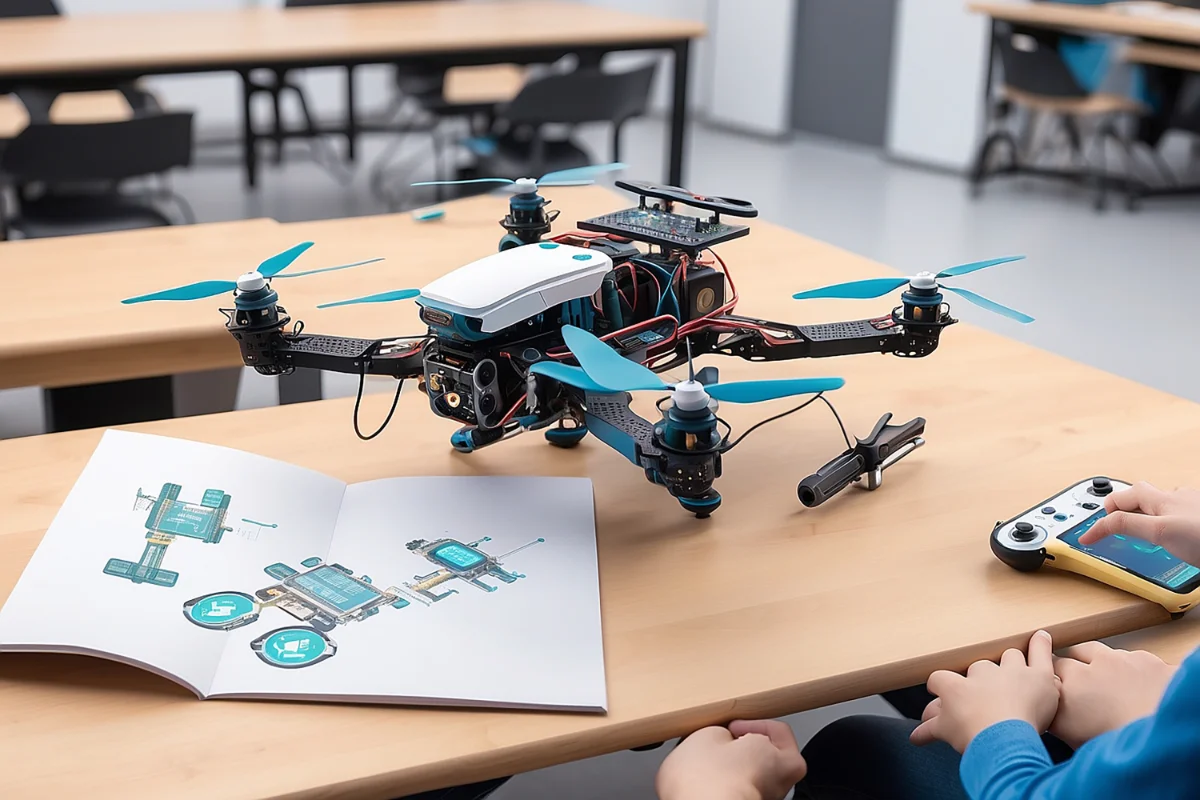
SkyTrack’s public compatibility references to PX4, ArduPilot, ROS, MAVLink, and QGroundControl are relevant here because they signal the platform is built to sit across commonly used autonomy and control ecosystems. That kind of integration surface is exactly what an OEM-facing mission layer needs if it is meant to shorten partner deployment rather than add another silo.
Embedded does not mean closed
OEM teams often worry that a mission platform will force them into another dependency. That is why openness and modularity matter in this category. SkyTrack’s public “open platform” language, plus full SDK and API access on both Community and Builder plans, suggests a model where partners can build on shared infrastructure while still retaining flexibility around their own application logic and deployment choices.
For OEMs, that matters commercially as much as technically. The goal is to speed partner deployment without turning every partner engagement into a bespoke software services project. A more open, modular robotics software stack for OEMs can help do that by preserving reusable logic while leaving room for partner-specific extensions where they actually matter.
Robotics software stack for OEMs should improve integration readiness
Integration readiness is more than API availability
A robotics software stack for OEMs should not be judged only by whether an API exists. Integration readiness is broader. It includes whether the mission workflow is understandable, whether the hardware can be onboarded into a usable system quickly, whether validation can happen before live deployment, and whether the partner can scale operations without redesigning the workflow around the device.
This is where SkyTrack’s public minimum requirements and lifecycle messaging become relevant. The site says users need a supported local environment for the SkyTrack client and simulator, plus compatible devices or datasets, after which missions can be designed, simulated, and iterated through the platform. That points to a readiness model built around integration plus mission development, not just bare connectivity.
Partner deployment gets faster when the workflow is already structured
The fastest partner deployment usually happens when the mission workflow is already structured before the hardware lands in the partner’s hands. That means clearer mission blocks, cleaner onboarding logic, and an operational path that is easier to explain. A platform that supports that structure reduces the amount of translation the partner must do, which is exactly how deployment speed improves without sacrificing quality.
This is one reason the Builder and Scale plan distinction matters. SkyTrack publicly says Builder is for growing teams and serious projects, while Scale is for commercialized and mission-critical operation at scale with dedicated engineering support and custom training. That progression matches how OEM partnerships often mature: first faster integration, then more structured partner deployment, then larger-scale support.
How SkyTrack fits the OEM / hardware partner integration category
The platform already speaks the language of partner deployment
SkyTrack’s public homepage explicitly says “Open Integration” and describes that as connecting and collaborating with hardware vendors and cloud services. Combined with Device Onboarding, cross-hardware deployment language, and shared compatibility across common autonomy ecosystems, this makes the platform highly relevant to the OEM / hardware partner integration category. The core outcome is clear: help partners turn hardware into working mission systems faster.
That is exactly the outcome this category should define. An OEM robotics integration platform is valuable because it reduces partner-side engineering by giving hardware a reusable mission layer, a cleaner onboarding path, and an easier route into real deployment. SkyTrack’s public product language supports all three of those requirements.
The builder and partner loop matters here too
OEM deployment quality improves when hardware partners can surface integration friction quickly. Weak onboarding assumptions, missing mission abstractions, or unclear partner handoffs often appear only after real integrations begin. That is one reason public community support and technical support matter. SkyTrack’s pricing page states community support is available through Discord, with technical support available for Builder and dedicated engineering support for Scale.
Open Mission Studio and run a mission end-to-end at SkyTrack platform.
If something feels unclear or breaks your flow, drop feedback in Discord.
Frequently Asked Questions
What is an OEM robotics integration platform?
An OEM robotics integration platform is a software layer that helps hardware partners turn devices into deployable mission systems faster. Its value comes from improving integration readiness, preserving reusable mission logic, and reducing repeated partner-side engineering.
How is a mission platform for OEMs different from basic device integration?
A mission platform for OEMs goes beyond simple connection or API access. It helps partners move from device compatibility to deployable workflows by supporting mission creation, onboarding, validation, and operations inside one more coherent system.
Why does reusable mission logic matter so much for hardware partners?
Reusable mission logic matters because it lets OEMs and partners avoid rebuilding the same workflow architecture for every integration. That reduces repeated engineering effort and makes partner deployment faster and more scalable over time.
What role does Device Onboarding play in OEM deployment?
Device Onboarding matters because it helps break the integration silo and connect hardware into a usable mission system. In an OEM context, that means the hardware can move more quickly from technical readiness to partner deployment readiness.
Why is an open robotics software stack useful for OEMs?
An open robotics software stack for OEMs is useful because it lets partners build on shared infrastructure while retaining flexibility over their own application logic and deployment choices. That makes the platform more helpful as an enablement layer rather than a closed replacement for partner-specific value.
Conclusion
An OEM robotics integration platform matters because OEMs do not win only by shipping capable hardware. They win by helping partners turn that hardware into deployable mission systems faster. A strong mission platform for OEMs, practical robotics software for hardware partners, a cleaner robotics integration software layer, a useful embedded mission platform, and a stronger robotics software stack for OEMs all point to the same commercial outcome: less repeated partner-side engineering and faster deployment readiness. That is what moves hardware from “integrated” to actually deployable.