A robotics simulator for UAV missions matters because field success is usually decided before the aircraft ever leaves the ground. Many UAV teams can script a route, test a payload, and fly a mission once under controlled conditions. The harder problem is proving that the same mission can survive real terrain, real timing constraints, real payload behavior, and real operator handoffs without introducing avoidable risk. That is why simulation has become a mission readiness discipline rather than a nice-to-have technical extra. SkyTrack publicly positions its platform around mission-first development with Mission Studio, Device Onboarding, and Fleet Management, and its core workflow emphasizes designing, simulating, and deploying missions across multiple vehicle types.
For UAV teams, the real value of a robotics simulator for UAV missions is not simply visualization. It is the ability to test pathing, payload logic, environmental assumptions, and operator readiness before the first real launch. That makes simulation central to deployment confidence, especially when teams want repeatable operations rather than one-off flights. In SkyTrack’s public product language, simulation is not isolated from the rest of the platform. It sits inside a broader mission lifecycle that supports design, iteration, and rollout, which is exactly the context in which UAV simulation becomes strategically useful.
Why simulation matters more when missions become operational
A successful flight test is not enough
A single successful flight often creates the illusion that the mission is ready. In reality, one field test can hide unstable route logic, assumptions about weather or terrain, weak payload behavior, or operator dependence that becomes a problem under scale. A robotics simulator for UAV missions helps expose these weaknesses early, when correction is still fast and relatively cheap.
This is why serious UAV teams should treat simulation as a pre-deployment system rather than a demo environment. The mission is not truly ready just because the aircraft completed a route once. It is ready when the workflow has been exercised enough to reveal fragile assumptions before they become operational failures. That is the difference between proof of motion and proof of readiness.
Drone mission simulation software reduces risk where field trials are expensive
Drone mission simulation software becomes more valuable as field trials grow more expensive, constrained, or high-stakes. Even in ordinary commercial use, repeated live flights consume time, field access, staff attention, and safety margins. In more complex deployments such as corridor inspection, public safety support, or mixed-environment missions, the cost of learning exclusively through real flights becomes even higher.
A simulator allows teams to absorb that learning earlier. It helps them refine route behavior, payload sequencing, mission timing, and operational logic before committing aircraft and operators to real conditions. This is one reason simulation belongs closer to mission design than to after-the-fact debugging. It is part of how a team earns the right to trust its workflow.
What a robotics simulator for UAV missions actually helps teams test
Pathing logic before pathing failure
One of the clearest jobs of a robotics simulator for UAV missions is testing whether the route actually behaves the way the team expects. On paper, a path may look clean and efficient. In practice, timing, turning behavior, edge-case navigation, waypoint sequencing, and mission transitions often expose weaknesses that are not obvious in a static plan.
Simulation helps because it makes those weaknesses visible before launch. Teams can see where pathing becomes awkward, inefficient, or brittle, and they can improve the mission while it is still safe to iterate quickly. That is especially useful when route quality affects the value of the output itself, such as in inspection, search patterns, mapping, or repeatable farm operations.
Payload logic before costly live mistakes
UAV missions often depend on more than navigation. Payload actions, sensor timing, scan triggers, and sequence control can be just as mission-critical as the route. A drone mission simulation software workflow should therefore help teams understand not only where the aircraft goes, but what happens while it is there.
This matters because payload errors can be expensive even when flight control remains stable. A mission can be technically successful in the air and still fail operationally if payload actions happen too early, too late, or under the wrong assumptions. Simulation helps teams test those relationships before they become real-world waste or risk.
Environmental assumptions before field exposure
A mission may be designed in one context and deployed in another. Lighting, terrain, obstructions, coverage patterns, and environmental uncertainty all influence how well the mission performs. A strong autonomous mission simulator helps the team evaluate whether the mission logic still holds when real-world complexity begins to push against the original design.
That is why simulation should not be reduced to visual rehearsal. It is a place to challenge assumptions. The more a team can discover there, the less it has to discover through costly field exposure. In UAV operations, that shift has a direct impact on both safety and deployment efficiency.
Mission validation in simulation before real launch
Mission validation in simulation creates better deployment discipline
Mission validation in simulation is one of the most important steps between a promising workflow and a trustworthy workflow. The point is not simply to prove that a mission can run. The point is to confirm that it behaves predictably enough to justify field execution. That means checking route logic, sequencing, payload timing, environmental fit, and operator understanding before the aircraft is exposed to real conditions.
This is where simulation becomes operational rather than experimental. A mission that has gone through validation is easier to explain, easier to hand off, and easier to approve internally. That is especially important for teams that need repeatable execution rather than exploratory flying. In practice, validation helps make deployment feel structured instead of improvised.
Pre-flight validation software matters when confidence must be earned
Pre-flight validation software matters because confidence in UAV missions should be built, not assumed. In live operations, teams are often tempted to trust missions that look plausible because the pressure to launch is high. A better workflow puts validation earlier in the process, when the team still has the time and safety margin to fix weak logic.
SkyTrack’s public product story leans in this direction by linking mission design, simulation, deployment, and operational control inside one broader platform. That matters because validation is most valuable when it is not isolated. It should sit inside the same mission workflow that teams will eventually take into real operations. SkyTrack also publicly highlights mission execution insights and clearer simulation errors in recent platform updates, which reinforces the importance of simulation as part of deployment quality rather than as a separate sandbox.
Sim-to-real drone deployment starts in the simulator
Sim-to-real drone deployment is about continuity, not only testing
Sim-to-real drone deployment is often described as if it were a narrow transfer problem between simulation and field execution. In reality, it is a continuity problem. The team needs to know whether the mission logic refined in simulation can remain meaningful when it reaches real aircraft, real operators, and real field conditions.
This is why the best simulator workflows do more than visualize route outcomes. They help preserve the structure of the mission as it moves through design, validation, and launch readiness. SkyTrack’s public positioning explicitly connects design, simulation, and deployment as one lifecycle, which is exactly the frame a UAV team needs when it wants the mission to survive the transition from controlled testing to field execution.
Autonomous mission simulator workflows help teams fail early
An autonomous mission simulator creates the most value when it becomes a place to fail early. That means surfacing weak assumptions, brittle sequencing, and pathing issues while the cost of change is still low. Teams that do this well tend to reach deployment with cleaner logic and more stable operator expectations, because the simulator has already exposed what would otherwise have appeared during field trials.
This is one of the most practical reasons to invest in simulation. It shortens the distance between learning and correction. The earlier teams can test and revise mission behavior, the more likely the final deployment is to feel deliberate rather than reactive.
How SkyTrack fits this UAV simulation workflow
The SkyTrack platform treats simulation as part of the mission lifecycle
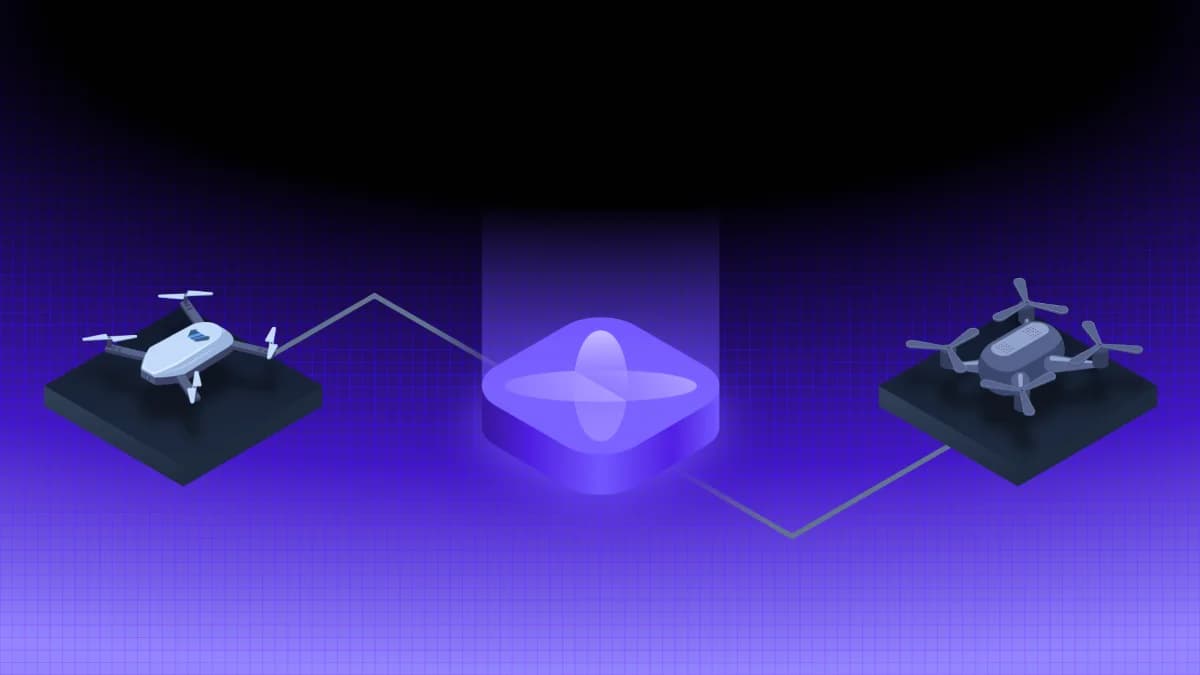
SkyTrack publicly describes itself as an open platform for developing, managing, and scaling autonomous mission-based applications, with Mission Studio, Device Onboarding, and Fleet Management as the visible core functions available today. The platform language repeatedly connects “design, simulate, deploy,” which means simulation is presented as part of mission development and rollout rather than as an isolated utility.
For a UAV team, this matters because the simulator becomes more useful when it is close to the mission layer. A robotics simulator for UAV missions should not sit on the edge of the workflow. It should help shape the mission before launch and support better decisions about what is actually ready to fly. Open Mission Studio and run a mission end-to-end at SkyTrack platform.
UAV teams need more than route previews
A serious UAV program needs more than a visual confirmation that the route exists. It needs stronger understanding of how the mission behaves, how payload actions align with route structure, and how the workflow should be validated before the field team commits to launch. That is why the simulator should be treated as part of a broader mission system, not just a preview window.
SkyTrack’s public compatibility references to PX4, ArduPilot, ROS, MAVLink and QGroundControl also reinforce that the platform is thinking in terms of a broader builder ecosystem rather than a single isolated toolchain. For teams working across UAV workflows that must eventually deploy under real conditions, that broader mission context makes simulation more valuable.
How to evaluate a robotics simulator for UAV missions
Start with one mission that already matters
The strongest evaluation method is to begin with one workflow that already matters to the team. This could be a corridor inspection route, a public safety support mission, a farm scouting routine, or a repeated mapping task. The point is not to admire simulation features in the abstract. The point is to see whether the robotics simulator for UAV missions actually helps the team reduce uncertainty before the first live launch.
A meaningful test should reveal whether pathing improves, whether payload behavior becomes clearer, whether operator readiness gets stronger, and whether the mission enters deployment with fewer hidden assumptions. Those are the signals that show simulation is doing real work rather than just adding visual polish.
Measure disappearing uncertainty, not only simulator realism
Teams can waste time debating visual realism while overlooking the more important question: does the simulator reduce uncertainty that would otherwise appear in the field? That is the right standard for mission validation in simulation. The job is not to perfectly copy reality. The job is to make the mission more trustworthy before real consequences begin.
This is why evaluation should include route logic, payload sequencing, mission timing, and field-readiness questions rather than only graphical fidelity. If the simulator helps the team answer those questions earlier and with more confidence, it is creating operational value. If something feels unclear or breaks your flow, drop feedback in Discord.
Frequently Asked Questions
What is a robotics simulator for UAV missions?
A robotics simulator for UAV missions is software that helps teams test mission behavior before real flight. It supports route evaluation, payload logic checks, environmental assumptions, and validation steps so the mission can be improved before launch. Its value comes from reducing uncertainty and helping teams reach the field with stronger mission readiness.
How is drone mission simulation software different from a basic route preview?
Drone mission simulation software should do more than display where the aircraft will go. It should help teams understand how the mission behaves as a workflow, including payload triggers, sequencing, timing, and environmental fit. A route preview shows a path. A simulator helps validate whether that path is operationally sound.
Why is mission validation in simulation important?
Mission validation in simulation is important because it allows teams to challenge assumptions before the mission enters real conditions. That includes validating route behavior, payload coordination, and workflow readiness under scenarios that would be more expensive or risky to discover in the field. It is one of the most effective ways to improve launch confidence.
What does pre-flight validation software improve for UAV teams?
Pre-flight validation software helps UAV teams confirm whether a mission is truly ready to fly. It improves confidence by making it easier to detect logic gaps, sequencing issues, and field-readiness problems before takeoff. That reduces avoidable launch risk and makes deployment feel more structured.
How does sim-to-real drone deployment benefit from a mission-first platform?
Sim-to-real drone deployment benefits from a mission-first platform because the same mission logic can move through design, simulation, validation, and rollout without becoming fragmented. That continuity makes the simulator more useful and the deployment more stable. Instead of testing one-off route behavior, the team is strengthening a reusable mission workflow that can survive real-world execution.
Conclusion
A robotics simulator for UAV missions is most valuable when it helps teams make better deployment decisions before the aircraft leaves the ground. It supports stronger route logic, better payload coordination, clearer mission validation in simulation, and a more confident path into sim-to-real drone deployment. For UAV teams that need more than one successful flight, the right simulator becomes part of the mission system itself. That is what turns simulation from a visual aid into a real operational advantage.