Simulation to field deployment is the moment when controlled testing meets operational uncertainty. A mission can look stable in a simulator, pass a clean internal test, and still become fragile once it reaches live hardware, field conditions, and real operators. That is why serious drones/robotics teams should not treat deployment as a simple handoff from test to launch. They need a workflow that validates what matters before the aircraft or robot leaves the simulator. SkyTrack’s public product story is built around this exact transition, positioning the platform around Mission Studio, Device Onboarding, and Fleet Management inside a broader design-simulate-deploy lifecycle.
The real value of simulation to field deployment is not that teams can see a mission before it runs. The real value is that they can challenge assumptions before those assumptions become field failures. That is where sim to real robotics, lab to field robotics workflow, pre-deployment simulation robotics, and field-ready autonomous missions start to connect. The strongest deployment systems reduce guesswork by turning simulation into a readiness layer rather than a visual checkpoint.
Why simulation to field deployment usually breaks at the transition point
A clean simulator run does not prove field readiness
The simulator is often where a mission looks most confident. Conditions are controlled, the workflow is still close to the builder, and the system has not yet been forced to deal with real timing pressure or real-world irregularity. That creates useful technical confidence, but it can also hide weaknesses in route logic, payload timing, operator understanding, or environmental assumptions. A mission that succeeds in that protected context may still be unready for the field.
This is why simulation to field deployment should be treated as a distinct operational phase. The team is no longer only asking whether the mission can run. It is asking whether the mission can survive being trusted outside the simulator. SkyTrack’s About page supports that framing directly by calling out pre-flight validation in digital twin environments and by describing the platform shift from hardware-first to mission-first development.
Guesswork grows when the workflow is not validated deeply enough
Teams usually do not deploy weak missions because they enjoy risk. They deploy weak missions because the mission looked “good enough” in testing and the missing checks stayed invisible. In practice, guesswork appears when route behavior has not been stress-tested, when the payload sequence has not been challenged under realistic conditions, or when the operator inherits the mission without clear understanding of what should happen if something drifts. That is where a promising prototype starts to become a risky field rollout.
That is also why real-world robotics deployment workflow design matters so much. The operational layer between simulation and launch should force the team to validate what still feels uncertain before the first live run. If that layer is weak, the field becomes the place where the team discovers basic mission weakness at the highest possible cost.
What teams need to validate before trusting a mission outside the simulator
Mission behavior, not just route geometry
A route that looks correct on screen does not automatically create a trustworthy mission. Teams need to know whether the mission logic still makes sense once route timing, payload actions, state changes, and environmental constraints start interacting. This is why pre-deployment simulation robotics should not stop at flight-path review. It should pressure-test how the mission behaves as a workflow, not only how it looks as a path.
This matters because real deployment failures are often behavioral rather than geometric. The aircraft may still move correctly while the mission outcome becomes unreliable. A stronger simulation to field deployment process reduces that risk by pushing teams to validate mission behavior before the workflow leaves the simulator.
Operational assumptions and field limits
Every mission carries assumptions, even when the team does not write them down clearly. Those assumptions may involve site conditions, timing windows, communications stability, environmental variation, or how much human intervention the workflow still expects. A strong sim to real robotics practice brings those assumptions into view before launch and forces the team to decide whether the mission still makes sense when those conditions are less ideal than the original test path.
This is one reason SkyTrack’s public emphasis on digital twin environments and deployment confidence is so relevant. The platform story does not stop at design. It explicitly connects simulation to validation and rollout, which is exactly what teams need if they want to reduce uncertainty before the mission enters real operations.
Human readiness and handoff quality
A mission is not field-ready just because the software logic compiles and runs. The team also needs to know whether operators understand the workflow, whether mission states are clear, and whether handoff from builder to field execution can happen without hidden private knowledge. This is where many lab to field robotics workflow problems begin. The builder knows what the system is supposed to do, but the operator inherits only part of that context.
That makes validation a human-readiness problem as well as a technical one. If the workflow becomes confusing once it leaves the original test team, then the mission is not yet trustworthy outside the simulator. Strong field-ready autonomous missions depend on the team being able to explain not only how the mission runs, but why it is ready.
The lab to field robotics workflow that reduces surprises
Keep mission logic continuous across stages
A strong lab to field robotics workflow does not rebuild the mission every time it moves forward. It preserves as much mission logic as possible from design through simulation, validation, and deployment. When teams maintain that continuity, improvements made in one stage stay attached to the workflow instead of being lost in translation between tools, scripts, and environments.
This is one reason SkyTrack’s public design-simulate-deploy structure matters. The platform is clearly described as one environment for building and scaling autonomous mission-based applications, and the Builder plan explicitly includes advanced sim-to-real workflows and reusable mission blocks. That supports a deployment model where the mission becomes more portable and less fragmented as it matures.
Use validation to remove uncertainty before launch
Teams should treat pre-deployment simulation robotics as the place where uncertainty gets reduced, not postponed. The mission should leave the simulator with fewer open questions about route behavior, mission timing, payload logic, and operator understanding than it had when testing began. If the major unknowns are still present at launch time, then the simulator has not been used as a readiness system.
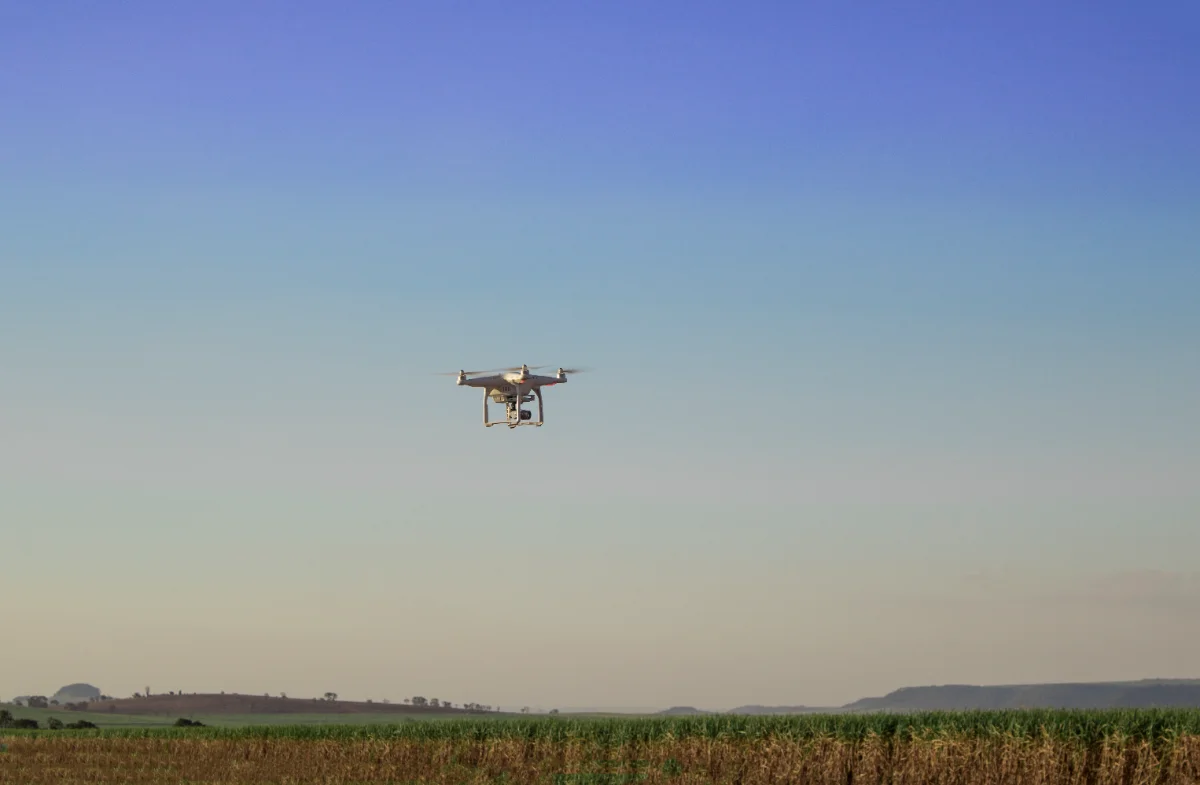
That is what makes simulation to field deployment different from simple testing. The point is not to admire a clean run. The point is to decide whether the mission has earned enough confidence to be trusted in an environment that will not forgive basic uncertainty. That is how teams build field-ready autonomous missions without waiting for the field to teach them every lesson the hard way.
How SkyTrack fits this simulation to field deployment workflow
The platform keeps simulation inside the mission lifecycle
SkyTrack publicly presents itself as an open platform to build and scale real-world autonomous missions across multiple vehicle types, and its core messaging repeatedly connects design, simulation, and deployment. Mission Studio is framed as reducing development time by designing once and deploying across hardware, Device Onboarding is framed as breaking the integration silo, and Fleet Management is framed as centralized operational oversight. That product architecture is highly relevant to simulation to field deployment because it keeps readiness work inside the same mission lifecycle instead of splitting it across disconnected systems.
Open Mission Studio and run a mission end-to-end at SkyTrack platform.
The builder loop helps teams harden missions faster
Deployment readiness improves fastest when teams can surface where the workflow still feels unclear or fragile. SkyTrack’s public pricing page says community support is available through Discord, and its homepage highlights a builder community around the platform. That matters because the weak points in sim to real robotics often appear only after repeated testing across more than one scenario. A short feedback loop helps teams turn those weak points into product and workflow improvement before rollout scale magnifies them.
If something feels unclear or breaks your flow, drop feedback in Discord.
FAQs
What does simulation to field deployment actually mean?
Simulation to field deployment means moving a mission from controlled testing into real execution with enough validation that the team is not relying on guesswork. It is the transition where simulation, readiness checks, and operational assumptions must all be challenged before the mission can be trusted in the field.
How is sim to real robotics different from basic simulation?
Sim to real robotics is broader than basic simulation because it focuses on carrying dependable mission behavior into the field. Basic simulation may show that a workflow can run virtually. Sim-to-real work asks whether that workflow can still be trusted when real operators, real hardware, and real conditions are involved.
Why is lab to field robotics workflow so difficult?
A lab to field robotics workflow is difficult because the lab hides many of the coordination, environmental, and handoff problems that appear in real operations. Controlled testing makes the workflow look stronger than it may be. The field exposes whether the mission can survive uncertainty without relying on the original builder to hold everything together.
What should teams check in pre-deployment simulation robotics?
In pre-deployment simulation robotics, teams should check route behavior, sequencing, payload logic, environmental assumptions, exception handling, and whether the operator understands the workflow well enough to run it outside the simulator. The goal is to remove uncertainty before launch, not simply to confirm that the mission looks good on screen.
What makes a mission field-ready?
Field-ready autonomous missions are missions whose assumptions, logic, and execution behavior have been challenged enough to support reliable real-world use. Field readiness is not only about technical completion. It is about whether the workflow can survive realistic conditions with fewer surprises and stronger operational confidence.
Conclusion
Simulation to field deployment is where teams decide whether a mission is ready to leave controlled testing and face operational uncertainty. The strongest drones/robotics teams reduce guesswork before launch by validating mission behavior, operational assumptions, and handoff quality while the workflow is still safe to improve. That is why sim to real robotics, a stronger lab to field robotics workflow, better real-world robotics deployment workflow design, more rigorous pre-deployment simulation robotics, and more dependable field-ready autonomous missions all matter together. They are not separate ideas. They are the system that lets teams trust a mission outside the simulator.