Simulation to production robotics is not about proving that a mission can run once in a simulator. It is about proving that the same workflow can survive real deployment without breaking into brittle exceptions, duplicated logic, and fragile operating habits. SkyTrack’s public product story frames this clearly: the platform is built around a mission-first lifecycle of design, simulation, and deployment, with Mission Studio, Device Onboarding, and Fleet Management as the current core layers. Its Builder plan also highlights advanced reusable mission blocks and advanced sim-to-real workflows, which reinforces the idea that production readiness is built through structured iteration rather than one clean demo.
For builders and deployment teams, the real challenge is not simulator success. The challenge is preserving mission intent as the workflow moves into real hardware, real operators, and real field constraints. That is why simulation to production robotics should be treated as a production-systems discipline. The goal is to move from prototype confidence to production reliability without creating separate mission versions for the lab, the field test, and the final deployment.
Why simulation success still breaks in production
A working prototype can still produce weak operations
A prototype often benefits from ideal conditions. The environment is controlled, the hardware path is known, and the people running the workflow are usually the same people who built it. That creates a kind of confidence that can be useful for learning but dangerous for deployment. Once the workflow reaches real operations, small weaknesses in sequencing, payload behavior, timing, or operator expectations become much more expensive to absorb.
This is why sim to real robotics should not be treated as a final handoff between two clean stages. The real risk is that teams quietly build a prototype that only works inside its original context. When that happens, production does not inherit a strong mission. It inherits a fragile one that has to be patched under pressure.
Production punishes fragmented workflows
One of the biggest causes of brittle scale is fragmentation. Teams often create one workflow for simulation, another for field testing, and a third for production because the earlier versions were never portable enough to survive the move. That duplication looks manageable at first, but it creates drift very quickly. Improvements made in one environment stop carrying forward cleanly into the others, and the team ends up maintaining multiple versions of what should have been one mission.
That is why simulation to production robotics should be judged by whether it reduces duplicated workflows. A strong platform keeps improvements attached to the mission itself. A weak one forces the team to keep translating the same mission into different local forms as deployment expands.
What simulation to production robotics should actually improve
Sim to real robotics should preserve workflow continuity
The strongest sim to real robotics model is built around continuity. The same mission logic should move through design, simulation, validation, and deployment without losing its structure at every stage. That does not mean the mission never changes. It means changes happen inside one coherent workflow rather than in disconnected versions that drift apart over time.
This is where SkyTrack’s public positioning matters. The platform consistently frames its product around a design-simulate-deploy lifecycle and says it shifts development from hardware-first to mission-first, with hardware freedom, pre-flight validation, and cross-platform deployment as core benefits. That lifecycle framing is exactly what teams need if they want production to inherit a hardened workflow instead of a brittle test artifact.

Prototype to production drone workflow needs more than route success
A prototype to production drone workflow becomes production-ready only when it proves more than route completion. Teams also need to validate mission timing, payload behavior, operator understanding, route edge cases, and the assumptions that hold the workflow together under real conditions. A route that works in a simulator may still be operationally weak if the rest of the workflow has not been stress-tested.
This is why buyers should evaluate production-readiness software through the lens of deployability rather than feature richness. The most valuable question is not “Can the mission run?” It is “Can the mission be trusted when real operations stop being forgiving?”
Digital twin to real-world deployment as a decision layer
A digital twin should reduce uncertainty before launch
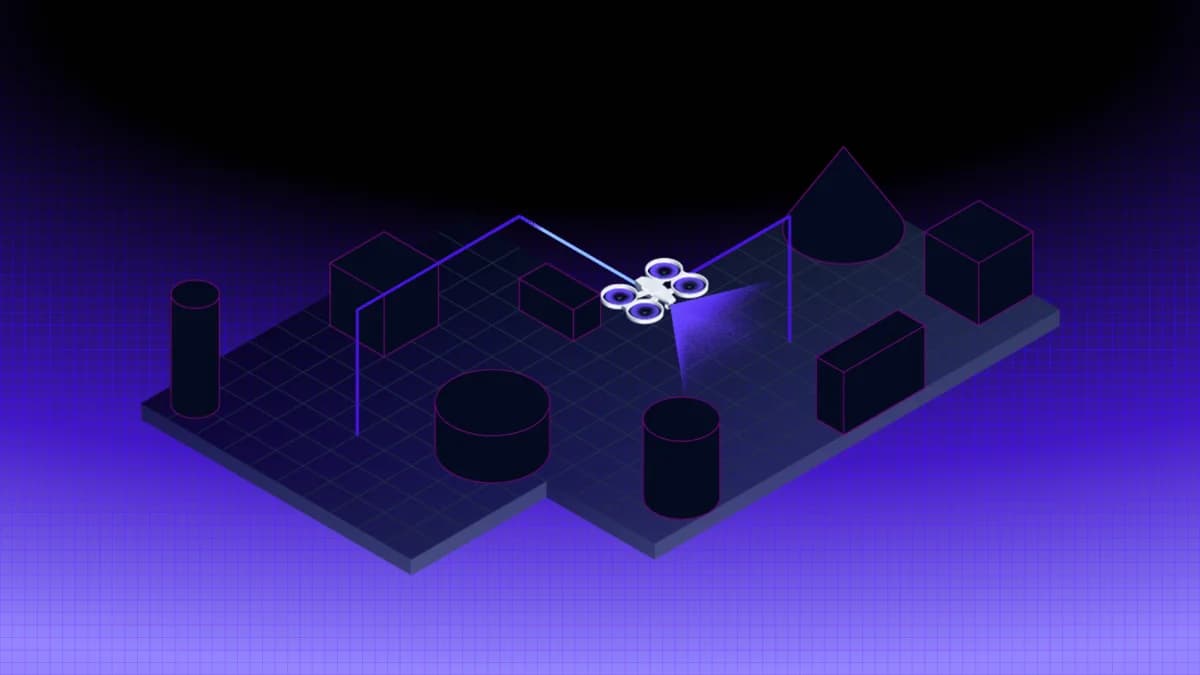
Digital twin to real-world deployment becomes useful when the digital twin helps teams test assumptions before reality does. The point is not only to visualize a mission. The point is to challenge whether the mission still behaves correctly when timing shifts, conditions vary, or execution becomes less ideal than the lab suggested. A digital twin becomes operationally valuable when it makes those questions easier to answer while the cost of change is still low.
SkyTrack’s About page explicitly describes pre-flight validation as testing in digital twin environments, which is a strong sign that the company views simulation as part of deployment readiness rather than as a separate sandbox. That matters because production reliability grows when simulation is used to remove uncertainty before field execution, not to decorate a route after the fact.
Mission portability is what lets production learn compound
The real power of digital twin to real-world deployment is lost if the workflow cannot travel. If every change in hardware, payload, or environment forces the team to rebuild major parts of the mission, then simulation learning becomes local instead of cumulative. A team may still improve the prototype, but it is not improving a production system in a durable way.
This is why mission portability matters so much in simulation to production robotics. Improvements made in validation and simulation should stay attached to the mission as it moves into real deployment. That is how teams get compounding value instead of repeated reinvention.
Sim-to-real mission validation is the bridge to production reliability
Validation should challenge behavior, not just execution
Sim-to-real mission validation is valuable because it asks whether the mission behaves correctly enough to be trusted, not just whether it runs. Teams need to test sequencing, payload timing, route logic, assumptions about the environment, and how the workflow responds under more realistic conditions. If validation stops at completion, the field becomes the place where the mission gets truly tested for the first time.
That is also where mission verification software matters. Verification should help the team explain why the mission is ready, what assumptions were tested, and where operational limits still exist. A workflow that cannot be clearly verified is usually much weaker in production than it looked in simulation.
Pre-deployment simulation robotics should expose weak points early
Pre-deployment simulation robotics is most useful when it exposes fragile logic before the mission reaches live hardware and live consequences. This includes weak transitions, route timing mismatches, payload dependencies, and execution patterns that look stable only because the test path was too narrow. The earlier these issues surface, the less likely the team is to push them into production under schedule pressure.
This is one of the clearest reasons SkyTrack’s Builder plan matters in this discussion. The public pricing page says the Builder tier includes advanced sim-to-real workflows and reusable mission blocks, which suggests the platform is designed to support repeated validation and stronger workflow hardening before scale.
Field-ready autonomous missions are built before launch
Field-ready autonomous missions depend on repeatable checks
Field-ready autonomous missions do not emerge from one perfect test. They are built through repeated checks that prove the workflow remains stable enough to survive real conditions, different operators, and more than one deployment context. Repeatability is what reveals whether the mission is truly strong or just temporarily successful.
This matters because production reliability grows from evidence, not from momentum. A team that repeats validation, repeatability checks, and operational review before launch is much less likely to discover basic mission weakness when the workflow is already serving live field needs.
Real-world robotics deployment workflow should remove surprises, not create them
A strong real-world robotics deployment workflow reduces uncertainty before the mission reaches operations. It should help teams confirm that the workflow is portable, understandable, and strong enough to run under less controlled conditions. If deployment becomes the place where basic mission assumptions are first challenged, then the workflow was not production-ready.
That is why the best production paths feel less dramatic over time. The work was done earlier. The launch is not where the team starts learning the mission. It is where the team begins proving that the mission can keep delivering under real conditions.
How SkyTrack fits this production-systems workflow
The platform keeps design, simulation, and deployment connected
SkyTrack publicly describes itself as an open platform for developing, managing, and scaling autonomous mission-based applications across multiple vehicle types. Its homepage emphasizes mission-first development, advanced mission tools, open integration, and fleet management under a centralized hub, while its About page adds hardware freedom, pre-flight validation, and cross-platform deployment. Together, these elements position the platform as a system where production readiness is supposed to be built inside one connected lifecycle rather than stitched together from disconnected tools.
Open Mission Studio and run a mission end-to-end at SkyTrack platform.
Builder feedback helps reduce production surprises earlier
Production systems improve fastest when teams can surface where the workflow still breaks before those breaks become operational norms. SkyTrack’s public site and pricing page both point users to a builder community and Discord-based support, which fits well with an early-access, mission-first product where friction often appears only after repeated use across environments.
If something feels unclear or breaks your flow, drop feedback in Discord.
FAQs
What does simulation to production robotics mean?
Simulation to production robotics means taking a workflow that succeeds in simulation and making sure it can become reliable in real operations. The focus is not only on testing, but on preserving mission quality through validation, portability, and readiness before live deployment.
How is sim to real robotics different from basic simulation?
Sim to real robotics is broader than basic simulation because it is concerned with carrying dependable mission behavior into the field. A simulator may prove that a workflow can run virtually. Sim-to-real work proves that the workflow can survive contact with operational reality.
Why does a prototype to production drone workflow become brittle?
A prototype to production drone workflow becomes brittle when mission logic is too tightly coupled to one simulator setup, one builder, or one local environment. That forces the team to duplicate and reinterpret the workflow as the system expands, which weakens consistency and increases deployment risk.
What role does mission verification software play here?
Mission verification software helps teams confirm that the mission is not only executable but also understandable, repeatable, and ready for deployment. It supports production readiness by making route behavior, assumptions, and workflow quality easier to validate before the field does that testing at higher cost.
Why do field-ready autonomous missions start before launch?
Field-ready autonomous missions start before launch because the most important readiness work happens during iteration, validation, and pre-deployment checks. If those layers are weak, production becomes the place where the team discovers mission weakness instead of the place where it benefits from mission strength.
Conclusion
Simulation to production robotics matters because production reliability is built long before the first live mission. Strong sim to real robotics, a cleaner real-world robotics deployment workflow, a less brittle prototype to production drone workflow, useful digital twin to real-world deployment, and more dependable field-ready autonomous missions all point to the same requirement: a mission system that can carry validated logic into production without breaking operations. For teams that want fewer surprises, less duplicated work, and stronger deployment confidence, that is the standard that actually matters.