UAV and UGV fleet management becomes difficult the moment air and ground systems have to support one operational model instead of two separate workflows. A drone team can run aerial missions well. A ground robotics team can run ground missions well. The real challenge begins when both must work under shared mission standards, common oversight, and a repeatable operating rhythm. That is where a true UAV UGV mission platform matters. SkyTrack publicly positions itself as an open platform to build and scale real-world autonomous missions across multiple vehicle types, with Mission Studio, Device Onboarding, and Fleet Management as its current core capabilities.
This category is not really about showing air and ground assets on the same screen. It is about unifying operational oversight. Teams need a mission platform for drones and ground robots that reduces duplicated ops logic, makes control boundaries clearer, and preserves one mission model even when the execution paths differ. SkyTrack’s public messaging around mission-first development, hardware freedom, cross-platform deployment, and fleet operations as the shift from single-pilot execution to centralized management maps directly to that need.
Why mixed fleets become an ops problem before they become a hardware problem
Aerial and ground systems can each work while the operation still fails
A UAV can complete its route and a UGV can complete its route, yet the broader operation can still be weak. The reason is simple: separate system success does not automatically create shared mission success. Teams often discover that the air workflow and the ground workflow were built with different assumptions, different readiness rules, and different intervention habits. Once those differences meet live execution, the operation starts fragmenting even when the individual vehicles behave correctly.
This is why mixed robot fleet operations should be framed as an operating-model challenge rather than only an integration challenge. The harder problem is not merely making both systems connect. The harder problem is making both systems answer to the same mission logic, the same oversight model, and the same standards for what “ready,” “active,” and “exception” actually mean. SkyTrack’s public emphasis on mission-first development is relevant here because it argues that mission logic should sit above the hardware layer rather than be rebuilt around it.
Separate tools usually create separate habits
When UAVs and UGVs are managed through separate tools, teams often end up building separate operating habits around them. One side treats mission readiness one way, the other side handles exceptions differently, and over time the organization is running two partial systems instead of one coordinated operation. That duplication does not always show up in the pilot phase, because early teams can absorb ambiguity through expertise and proximity. It becomes much more expensive once the fleet grows, more users are involved, and repetition turns those habits into operational drift.
That is the deeper reason a multi-vehicle mission software layer matters. The goal is not only to reduce interface sprawl. The goal is to reduce duplicated operational logic. SkyTrack’s product structure supports this idea because Mission Studio, Device Onboarding, and Fleet Management are presented as one connected lifecycle rather than as isolated point tools.
What UAV and UGV fleet management should actually unify
Shared mission standards should sit above vehicle differences
A UAV UGV mission platform should preserve one mission standard even when aerial and ground execution differ. Air and ground assets do not move the same way, sense the world the same way, or operate under identical constraints. A useful platform does not pretend those differences disappear. It creates a mission layer where the shared objective, mission phases, readiness rules, and intervention logic can stay aligned while the execution details remain vehicle-specific.
This is where heterogeneous robot fleet management becomes operationally meaningful. The fleet is heterogeneous, but the mission system should still be coherent. Teams need a way to manage different vehicle types under one operational model without flattening everything into an unrealistic abstraction. SkyTrack’s public language about starting with drones and scaling to any robot, plus its compatibility references to PX4, ArduPilot, ROS, MAVLink, and QGroundControl, supports that category direction.
Control boundaries should be clearer, not looser
Mixed fleets usually fail when nobody is fully certain where control responsibility begins and ends. Who approves the mission? Who owns intervention during live execution? Which exceptions are local to one vehicle, and which ones affect the entire mission? These are control-boundary questions, and they become more important as soon as air and ground systems share one workflow.
A strong UAV and UGV fleet management model should make these boundaries easier to understand. That is especially important in scaled or distributed operations, where distance and role specialization remove the informal cues small teams usually rely on. SkyTrack’s pricing page is relevant here because it explicitly says Builder is for growing teams with role-based access, while Scale is for commercialized and mission-critical operations. That suggests the platform is thinking about operational responsibility as part of maturity, not just access control.
Mission platform for drones and ground robots should reduce duplicated ops logic
Duplicated ops logic is the silent tax in mixed fleets
The most expensive part of mixed-fleet growth is often not the hardware. It is the repeated operational reasoning that teams keep rebuilding around different vehicles. They recreate launch assumptions, exception rules, telemetry interpretation, and mission review processes because the mission layer is too weak to travel across the fleet. This is where a mission platform for drones and ground robots creates real value: it reduces the need to solve the same operational problem multiple times in different technical forms.
This is also why the phrase multi-vehicle mission software matters more than a pure fleet-view label. The software should not just help the team see more vehicles. It should help the team keep more of the mission logic stable as the vehicle mix expands. SkyTrack’s public messaging around “design once,” mission-first development, and open integration aligns with that reuse-oriented approach.
One mission model improves coordination across teams
As soon as air and ground systems involve different operators, engineers, or supervisors, coordination gets harder. The organization needs a shared language for what the mission is doing, what state it is in, and what should happen next if the workflow changes. Without that shared model, teams spend too much time translating between air and ground viewpoints instead of managing one operation.
That is one reason UAV and UGV fleet management should be understood as a coordination system, not merely an asset system. A stronger mission model reduces handoff friction because it keeps both sides of the operation anchored to the same mission view. SkyTrack’s public framing of fleet operations as moving from single-pilot execution to centralized management points directly toward this kind of coordination maturity.
How operational oversight should work in mixed robot fleet operations
Oversight must include mission context, not just vehicle status
A useful oversight layer must help teams see more than locations and health indicators. It should also show mission context: what workflow is active, which vehicle is responsible for which phase, and whether the combined operation is still aligned with the planned objective. This is one reason mixed robot fleet operations are harder than parallel single-vehicle operations. The operator must understand the relationship between assets, not just the assets themselves.
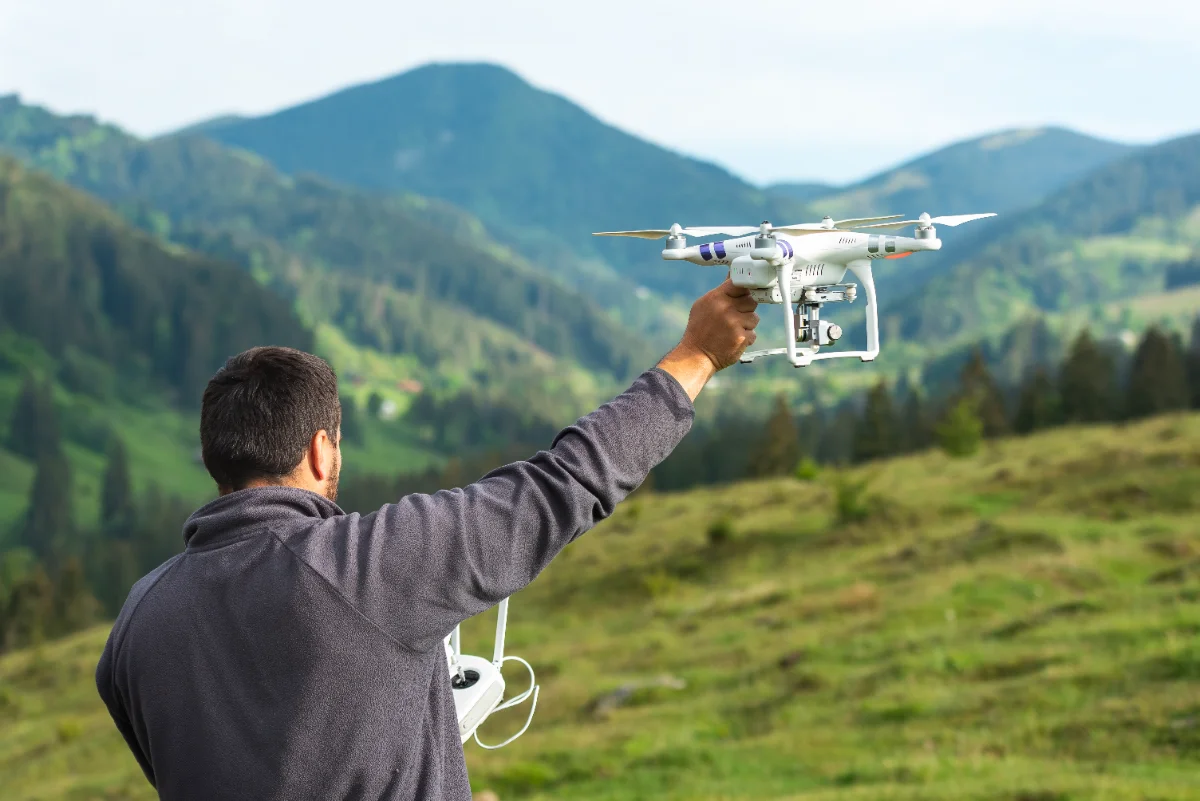
SkyTrack’s platform page is relevant here because its Fleet Management layer includes device status and location, health monitoring, secure telemetry viewing, and automated alerts. Those features matter more in a mixed fleet because telemetry and status only become truly useful when teams can interpret them within a shared mission context.
Intervention should happen at the right layer
In mixed fleets, not every problem belongs to the same control layer. Some issues are vehicle-local and should be handled by the specific UAV or UGV operator. Others are mission-level issues that affect sequencing, timing, or the broader objective. A strong UAV UGV mission platform should make it easier for teams to tell the difference. Otherwise, local anomalies can create larger operational confusion, or mission-level problems can be treated too narrowly.
That is where clearer control boundaries matter again. The software should help teams decide when to intervene at the device level and when to intervene at the mission level. SkyTrack’s public mission-first framing supports this distinction because it consistently argues that the mission layer should be treated as the durable operational asset above the hardware layer.
How SkyTrack fits this category?
The platform already reflects a shared mission lifecycle
SkyTrack publicly presents itself as an open platform for developing, managing, and scaling autonomous mission-based applications across multiple vehicle types. Its homepage and About page emphasize mission-first development, hardware freedom, pre-flight validation, and cross-platform deployment, while the platform page breaks the product into Mission Studio, Device Onboarding, and Fleet Management. That structure is especially relevant to UAV and UGV fleet management because it reflects one connected lifecycle rather than separate air and ground workflows.
This matters because unified operational oversight is strongest when mission creation, onboarding, and fleet management stay close together. The more those layers fragment, the more likely the organization is to duplicate ops logic across vehicle types. SkyTrack’s public product story points in the opposite direction: one mission-centric system that can be extended across multiple hardware contexts.
The current plans also reflect mixed-fleet maturity
SkyTrack’s pricing page says Builder supports up to 10 users and 10 drones with basic fleet management for small fleets, while Scale is intended for strategic scaling and mission-critical operation at scale. It also notes role-based access for growing teams and enterprise-grade support in the Scale tier. Those signals are useful for this category because they show the platform is already thinking in terms of structured operational growth rather than one-off technical adoption.
Open Mission Studio and run a mission end-to-end at SkyTrack platform.
If something feels unclear or breaks your flow, drop feedback in Discord.
FAQs
What is UAV and UGV fleet management?
UAV and UGV fleet management is the practice of managing aerial and ground assets under one operational model rather than running them as separate workflows. It becomes valuable when teams need shared mission standards, clearer control boundaries, and less duplicated ops logic across mixed fleets.
How is a UAV UGV mission platform different from separate fleet tools?
A UAV UGV mission platform is different because it unifies the mission layer above the vehicles. Separate fleet tools may still show asset status and control individual systems, but a shared mission platform helps teams preserve one mission model across air and ground execution. That makes coordination, review, and intervention more consistent.
Why does heterogeneous robot fleet management need shared standards?
Heterogeneous robot fleet management needs shared standards because different vehicle types often create different local habits if the mission layer is weak. Shared standards help teams align readiness, execution, and exception handling across air and ground systems instead of letting each vehicle class evolve its own operational logic.
What does multi-vehicle mission software actually improve?
Multi-vehicle mission software improves coordination by reducing duplicated operational logic and keeping mission behavior more stable across several vehicle types. It helps teams manage the workflow as one operation instead of maintaining separate operational assumptions for each asset class.
Why do mixed robot fleet operations become harder at scale?
Mixed robot fleet operations become harder at scale because distance, role specialization, and repeated execution expose weak control boundaries and unclear handoffs. The more vehicles and teams are involved, the more the organization needs one coherent mission model to keep the operation aligned.
UAV and UGV fleet management matters because mixed fleets need more than broad visibility. They need one operational model. A strong UAV UGV mission platform, supported by a practical mission platform for drones and ground robots, stronger mixed robot fleet operations, better heterogeneous robot fleet management, and more coherent multi-vehicle mission software, helps teams unify oversight instead of duplicating it. For organizations trying to scale both aerial and ground assets under one mission system, that is what turns mixed hardware into real operational maturity.