Many robotics projects reach a moment where the prototype finally works. The drone completes the route, the robot navigates the environment successfully, the perception model behaves correctly, and the research demonstration proves the core concept. For university teams, that milestone is important because it validates years of experimentation, simulation, and technical iteration. Yet for many labs, this is also where a different problem begins. A prototype that succeeds once inside a controlled research setup is not automatically ready for operational deployment. Real environments introduce unstable telemetry, inconsistent connectivity, environmental variability, changing hardware conditions, and operational coordination challenges that prototypes were never designed to handle. This is why university robotics lab deployment is becoming increasingly important as a distinct stage in the robotics lifecycle. The challenge is no longer only proving the concept. The challenge becomes turning isolated success into repeatable execution across real-world conditions, evolving mission requirements, and scalable deployment workflows.
The strategic shift that happens after the prototype works
Why successful prototypes still fail operationally
Research environments are designed to help teams explore possibilities quickly. Experiments can be adjusted rapidly, assumptions can remain flexible, and workflows can evolve continuously as new technical discoveries emerge. That flexibility is essential for innovation, but it often hides operational weaknesses that only appear later during deployment.
A robotics prototype may perform reliably inside one controlled environment while depending heavily on assumptions that do not survive outside the original setup. Connectivity may become unstable, telemetry visibility may change across environments, and mission sequencing may rely on undocumented operational knowledge held by the research team itself. The prototype technically works, but the workflow around it remains fragile.
This is one of the most common challenges in research to deployment robotics. Teams often spend years optimizing autonomy behavior while spending comparatively little time standardizing deployment structure. Once systems move toward field deployment for robotics labs, operational consistency becomes just as important as technical performance.
Why deployment changes the definition of success
Inside research environments, success is often measured by whether the system can complete the intended behavior at least once under controlled conditions. In deployment environments, however, success becomes defined differently. Teams must think about repeatability, operational reliability, telemetry continuity, mission replay, and adaptability across changing conditions.

This transition changes how robotics workflows are designed. Instead of optimizing only for experimentation speed, teams begin prioritizing mission standardization and structured validation. They need workflows that remain understandable across different operators, environments, and deployment stages rather than relying entirely on the original researchers who built the prototype.
This is where robotics software for university labs becomes operational infrastructure rather than simply development tooling. The software layer helps preserve mission continuity across changing environments while reducing fragmentation between experimentation and execution.
Why portability matters beyond one research setup
Many robotics teams unintentionally build workflows tightly coupled to one specific environment. Hardware integrations, mission parameters, telemetry assumptions, and operational sequencing may all depend on conditions unique to one lab or test site. As soon as deployment expands beyond that setup, operational complexity increases dramatically.
Lab to real world robotics workflows increasingly focus on portability because deployments rarely stay confined to one environment. Teams may move between simulation environments, outdoor testing sites, partner organizations, field pilots, and production operations over time. Without reusable mission architecture, every transition can force teams to rebuild large portions of the operational workflow.
A mission platform for university robotics helps reduce this fragmentation by preserving mission logic across changing environments instead of rebuilding operational structure repeatedly from scratch.
Core framework for repeatable university robotics lab deployment
Mission standardization beyond experimentation
Mission standardization becomes critical once research workflows move beyond isolated demonstrations. During experimentation, teams may tolerate inconsistent deployment processes because the primary goal is exploration. In operational environments, however, inconsistent workflows become deployment risks.
Standardization does not mean eliminating flexibility from research. Instead, it means preserving core operational structure around mission design, telemetry visibility, validation, mission replay, and deployment sequencing. This allows teams to continue experimenting while maintaining operational continuity across changing conditions.
Research groups working on autonomous inspection, fleet management, mission automation, and cross-platform autonomous missions increasingly standardize mission workflows earlier because deployment complexity grows rapidly once multiple environments and operators become involved.
Structured validation changes after deployment begins
Validation inside research environments is often focused heavily on whether the autonomy model behaves correctly under expected conditions. Once systems move closer toward deployment, validation becomes much broader. Teams must evaluate how workflows behave under environmental instability, degraded telemetry, communication interruptions, and operational uncertainty.
Structured validation helps bridge the gap between successful experiments and repeatable execution. Instead of validating isolated technical behavior alone, teams begin validating the operational workflow itself. This includes mission replay consistency, telemetry visibility, mission transitions, operational sequencing, and environmental adaptability.
Teams exploring digital twin to real-world deployment workflows often adopt structured validation earlier because they recognize that operational assumptions break more easily outside simulation environments than inside them.
Handoff from research workflow to operational workflow
One of the biggest transition challenges in university robotics lab deployment is operational handoff. A workflow that works well inside a research environment may still depend heavily on the original developers for deployment coordination, debugging, and operational decision-making.
This creates scalability limitations because operational continuity becomes tied to specific individuals instead of reusable workflows. Once deployment expands across additional operators, field environments, or partner organizations, undocumented assumptions quickly become operational bottlenecks.
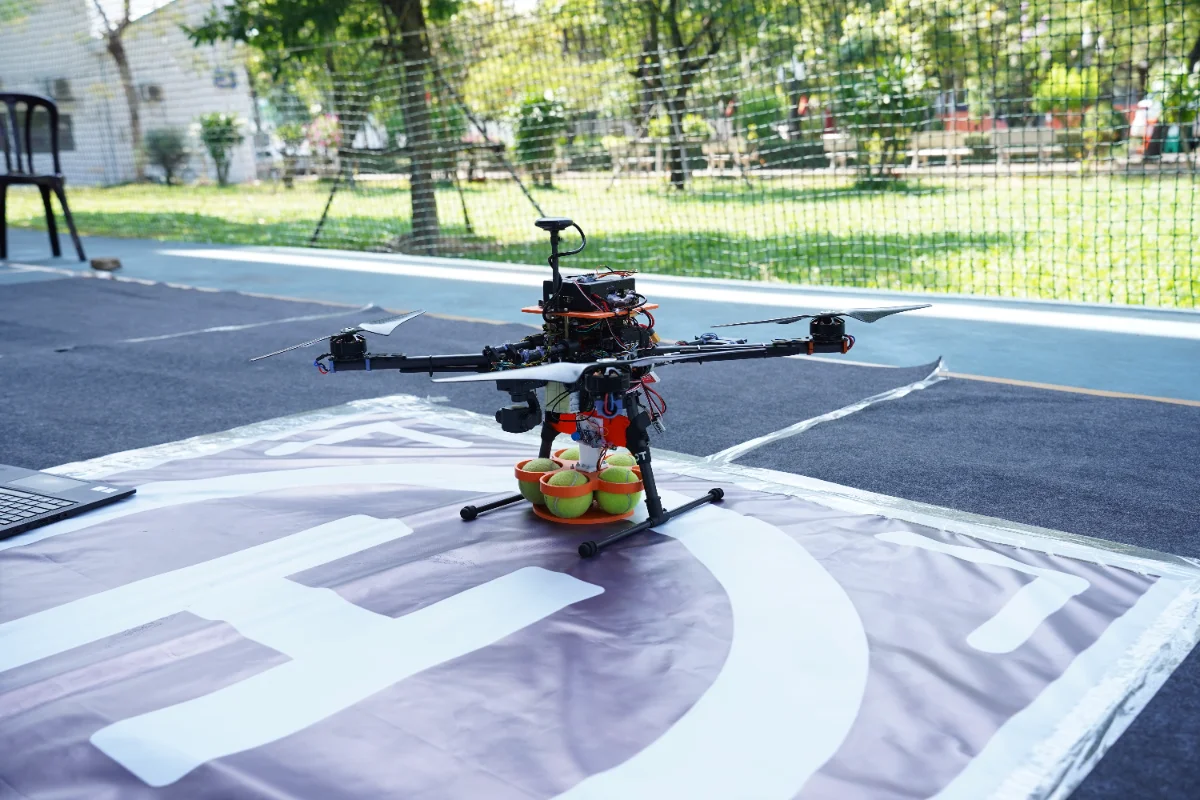
A robotics research platform helps improve handoff by preserving mission context through shared operational structure. Mission replay, telemetry review, mission sequencing, and deployment validation become easier to transfer between teams because workflows are documented operationally rather than existing only as research knowledge.
At SkyTrack, mission-first workflows help research teams structure deployment-ready operations around reusable mission architecture instead of isolated experimental environments.
Evidence-based analysis of research-to-deployment transitions
Infrastructure inspection research programs
Consider a university robotics team developing autonomous inspection workflows for industrial infrastructure environments. Early development focuses on navigation models, environmental mapping, and telemetry validation under controlled conditions. The prototype eventually succeeds during field demonstrations around the campus testing environment.
As the team begins collaborating with external operators, however, operational inconsistencies appear quickly. Connectivity conditions vary across locations, telemetry behaves differently between environments, and deployment coordination depends heavily on the original researchers understanding the mission structure.
The problem is no longer simply technical autonomy performance. The larger challenge becomes operational portability. By introducing mission standardization, structured validation, and repeatable deployment workflows earlier, the team improves its ability to transition from research success into scalable field execution.
Robotics competition environments
Robotics competitions often reveal the operational gap between prototypes and repeatable deployment. Teams may perform strongly inside one competition environment while struggling significantly when conditions shift unexpectedly. Environmental instability, communication inconsistencies, telemetry interruptions, and hardware variation often expose assumptions hidden during development.
Research teams that prioritize mission-centric robotics workflows and deployment portability usually adapt more effectively under these conditions. Instead of relying heavily on one ideal setup, they preserve operational continuity across changing environments.
Multi-team robotics research collaboration
University robotics projects increasingly involve collaboration across multiple teams, research groups, and external organizations simultaneously. One group may focus on navigation, another on perception, another on mission orchestration, and another on deployment tooling.
Without shared deployment structure, these workflows often become fragmented. Each group develops its own assumptions around telemetry, validation, and mission sequencing. Integration becomes difficult once deployment expands beyond isolated testing environments.
A mission platform for university robotics improves collaboration because operational workflows remain connected across research boundaries. Teams can align around shared mission structure instead of isolated experimentation silos.
Research groups exploring mission replay, fleet management, and autonomous mission workflows can experiment directly through Mission Studio before scaling deployments into broader operational environments.
Execution roadmap for deployment-ready research environments
Treat deployment architecture as part of research
Many university robotics projects delay operational planning until late-stage deployment. This often creates workflows that work technically but remain difficult to scale operationally.
Teams should treat deployment architecture as part of the research lifecycle itself. Mission replay, telemetry continuity, validation workflows, and deployment sequencing should evolve alongside experimentation rather than appearing only after prototypes succeed.
Build repeatability before scaling
Operational repeatability matters more than isolated success once deployments move beyond controlled environments. A workflow that succeeds once but cannot be reproduced consistently becomes difficult to operationalize at scale. Research teams should prioritize repeatable mission structure before expanding deployments into additional environments or operational partners. This significantly reduces operational fragmentation later.
Preserve mission visibility across environments
Mission visibility becomes increasingly important as deployments expand across different field conditions and operators. Teams need workflows where telemetry review, mission replay, validation history, and deployment sequencing remain understandable beyond the original research setup. A robotics software for university labs environment should preserve operational continuity even as hardware systems and field conditions evolve.
Design for long-term portability
The most scalable robotics workflows are rarely the most tightly optimized for one specific environment. Teams that design around portability and operational continuity generally transition more effectively from research toward deployment-ready systems.
Research groups discussing field deployment for robotics labs, mission automation, and operational validation workflows often share deployment lessons and experimentation patterns through the SkyTrack Discord community.
FAQs
Why do robotics prototypes often struggle after successful demonstrations?
Many robotics prototypes depend heavily on controlled conditions that do not exist during real deployment. Telemetry stability, environmental consistency, and operational coordination often behave differently once systems leave the original research setup. The prototype itself may function correctly while the surrounding deployment workflow remains fragile.
What changes once a robotics project moves toward deployment?
Deployment introduces operational requirements that extend beyond successful experimentation. Teams must think about mission replay, telemetry visibility, validation consistency, deployment portability, and operational sequencing across changing environments and operators.
Why is mission standardization important for university robotics teams?
Mission standardization helps research teams preserve operational continuity across evolving environments and hardware systems. Without standardization, workflows often become tightly coupled to one research setup, making deployment difficult to reproduce consistently elsewhere.
How does structured validation improve deployment readiness?
Structured validation helps teams evaluate operational workflows under changing conditions instead of validating only isolated technical behavior. This improves reliability because teams identify deployment weaknesses earlier before systems scale into broader field operations.
What helps research workflows transition into repeatable deployment?
Research workflows transition more effectively when experimentation, mission replay, telemetry visibility, validation, and deployment sequencing remain connected throughout the lifecycle. Teams that prioritize operational continuity early usually encounter fewer scaling problems later.
Conclusion
University robotics lab deployment begins after the prototype works, not before. Once systems move beyond isolated demonstrations, teams must solve a different class of problems involving mission standardization, operational portability, telemetry continuity, validation depth, and repeatable execution across changing environments.
As research to deployment robotics workflows become more important across autonomous inspection, fleet management, mission automation, and real-world robotics deployment workflow environments, university teams will increasingly depend on software layers capable of bridging experimentation and operational execution together. Teams that build mission-centric robotics workflows early will be significantly better positioned to turn successful prototypes into scalable field-ready systems.