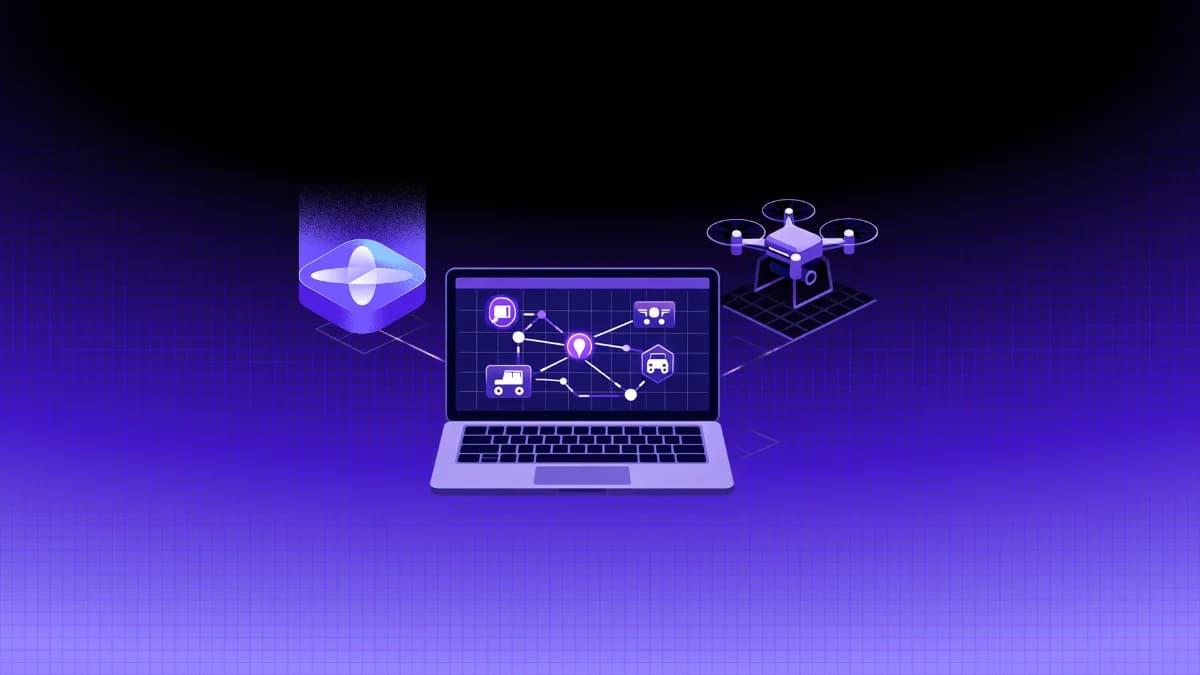
Mission operations software becomes important at the point where mission design is no longer the hard part. The harder part is keeping live operations aligned once missions are scheduled, launched, monitored, and adjusted under real conditions. In growing UAV programs, this is the layer between planning and field execution where teams either gain operational control or fall back into manual coordination. SkyTrack’s public product story maps closely to this category because it frames the platform around Mission Studio, Device Onboarding, and Fleet Management, and describes its workflow as design, simulate, and deploy for real-world autonomous missions.
For field teams and enterprise operators, mission operations software should do more than show aircraft on a screen. It should connect mission scheduling, execution state, monitoring, and intervention into one coherent operational layer. SkyTrack publicly describes Fleet Management as operating with safety and compliance under a centralized hub, while its About page frames fleet operations as the shift from single-pilot execution to centralized management. That is exactly the operational gap this software layer is meant to close.
Why mission planning is not enough once live operations begin
A planned mission can still become a weak live operation
A mission can be fully planned and still be operationally fragile. In early-stage programs, one experienced operator can often absorb timing issues, route ambiguity, and local exceptions through judgment in the moment. That can make a system look more mature than it really is. As soon as missions become recurring, shared across shifts, or run across multiple aircraft, those hidden weaknesses become harder to manage manually.
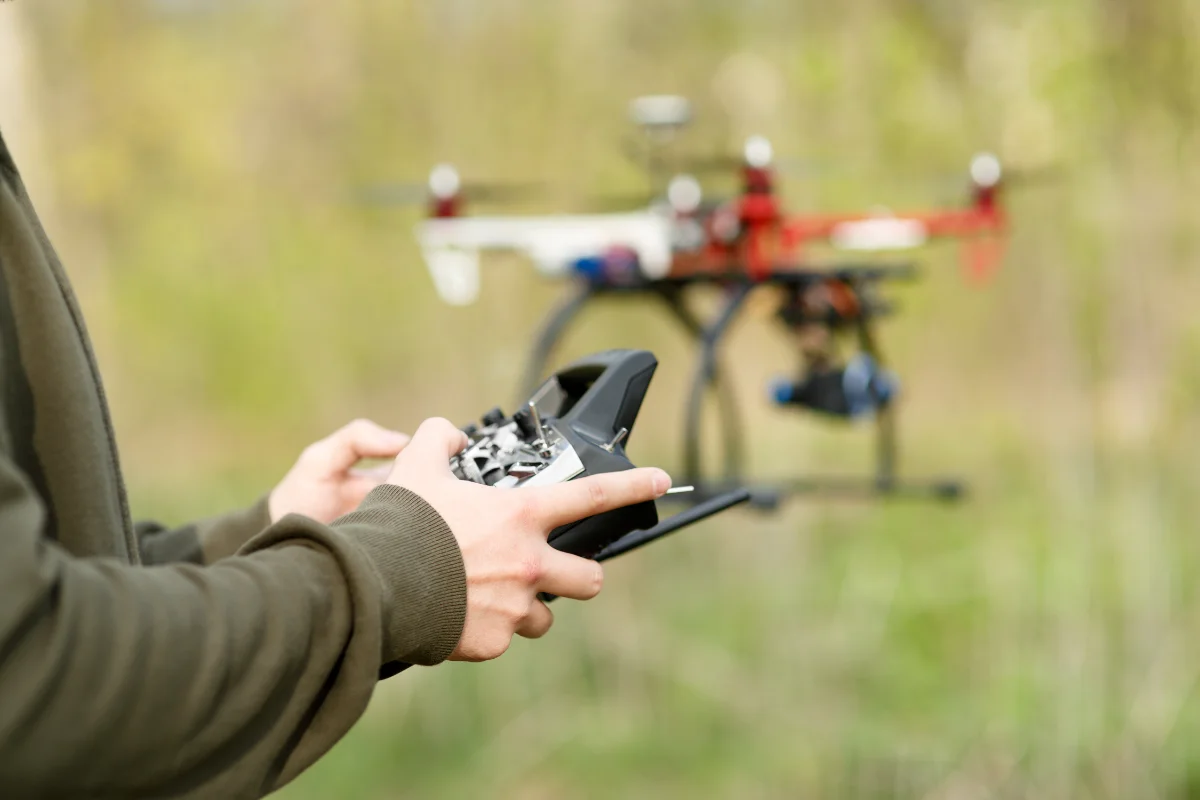
This is where mission operations software starts to matter. The system must help teams preserve mission intent after planning is complete, not just before launch. That means the software needs to keep execution, monitoring, and intervention tied to the same mission logic rather than letting live operations drift into a separate ad hoc process. SkyTrack’s platform language supports this lifecycle view by consistently linking mission creation, device onboarding, and fleet-level operations.
The operational problem starts after the route exists
Many teams initially assume that once the route is correct, the difficult work is mostly done. In practice, route definition is only one part of the workflow. Real operations require live scheduling, mission-state awareness, exception handling, escalation paths, and a way to intervene without losing control of the broader mission context. Those needs are exactly why UAV fleet operations software evolves into a more specific category around operational coordination.
SkyTrack’s public product structure reinforces this idea. Mission Studio is presented as the design layer, Device Onboarding as the hardware connection layer, and Fleet Management as the centralized operational layer. That breakdown suggests the company sees live control not as a separate dashboard problem, but as the continuation of the mission lifecycle into real execution.
What mission operations software should actually connect
Scheduling should stay tied to mission logic
Scheduling is often treated as a calendar problem when it is really a mission logic problem. A mission schedule only creates value if it preserves the timing assumptions, operational dependencies, and readiness criteria built into the workflow. If scheduling happens outside the mission system, teams can easily end up launching the right mission at the wrong time, under the wrong conditions, or without the right supporting context. That is one of the fastest ways for a strong plan to weaken in the field.
This is why strong mission operations software should connect planning to execution state rather than treating them as separate tools. In mission-first platforms, the operational layer is more useful when it inherits the logic of the mission instead of forcing operators to rebuild context at launch time. SkyTrack’s public “design, simulate and deploy” framing points in exactly that direction.
Live execution needs context, not only status
A control screen can tell teams what aircraft are doing, but that does not automatically tell them what the mission is doing. Live execution becomes operationally meaningful when teams can see mission context, active phase, expected behavior, and whether the workflow is staying aligned with plan. This is where drone operations management platform logic becomes more useful than generic fleet visibility alone.
This distinction matters because many live issues are not aircraft failures. They are mission-state failures. A route may still be running while the mission has drifted in timing, payload sequence, or exception handling. A good mission operations software layer helps operators detect that drift early enough to intervene with context rather than reacting blindly to an alert stream.
Monitoring should support intervention, not just observation
Monitoring becomes valuable when it gives teams enough signal to decide what to do next. In active UAV operations, that means knowing whether the mission is progressing as intended, whether exceptions are local or systemic, and whether intervention belongs at the aircraft level or the mission level. This is especially important in recurring operations where the cost of delayed reaction grows quickly as missions multiply.
That is also why fleet telemetry management belongs in this category. Telemetry becomes operationally useful when it helps teams interpret mission behavior rather than simply collect device data. In SkyTrack’s public positioning, Fleet Management is clearly framed as centralized operational oversight, which makes telemetry more meaningful when it is tied back to mission execution.
Why scale turns live control into a workflow discipline
Multi-drone operations need orchestration above the aircraft layer
A single aircraft can be managed through close attention and local expertise. A multi-drone operations platform cannot rely on that model for long. As more aircraft join the operation, the team needs structured workflows that define mission ownership, execution expectations, and how interventions affect the larger mission state. Without that orchestration layer, scale turns into coordination debt very quickly.
This is why mission operations should be treated as workflow orchestration rather than only aircraft control. The platform should help teams preserve coherence across multiple active missions and multiple aircraft without requiring operators to reconstruct the mission model from memory. That is the practical difference between a system built for pilots and a system built for operations.
Role clarity is part of live control quality
Operations become brittle when role ownership is vague. Teams need to know who schedules, who approves readiness, who watches execution, who responds to anomalies, and who decides whether the mission continues or pauses. In small programs, those roles can blur without much damage. In larger programs, unclear ownership becomes a serious source of inconsistency.
A mature mission operations software layer should support that role clarity by making handoffs and responsibilities easier to see inside the workflow. This matters to enterprise buyers as much as to field engineers because operational maturity usually fails first at the coordination layer, not the hardware layer. SkyTrack’s pricing model, which distinguishes Builder from Scale through growing responsibility and scale of real-world deployment, also supports this maturity framing.
How SkyTrack fits the mission operations layer
The platform already spans design, onboarding, and fleet oversight
SkyTrack publicly says it is an open platform for developing, managing, and scaling autonomous mission-based applications across multiple vehicle types. Its current early-access capabilities are explicitly listed as Mission Studio, Device Onboarding, and Fleet Management. That structure aligns well with the category of mission operations software because it suggests the operational layer is not detached from mission design. It sits downstream from the same workflow that created the mission in the first place.
This matters because live control is much stronger when it stays close to mission logic. A platform that connects mission creation to device readiness and fleet oversight gives teams a better chance of keeping active operations coherent as scale grows. SkyTrack’s public messaging around centralized management, compatible integration, and mission-first development supports exactly that operational model.
The product path reflects a move from builder use to operational use
SkyTrack’s public pricing page describes Community as a foundation plan, Builder as the recommended tier for individuals and teams that want to speed up, and Scale as the plan for commercialized and mission-critical operation at scale. Builder includes fleet management for small fleets, while Scale is positioned around enterprise-grade support and scaling. That progression is meaningful because it mirrors the way mission operations software usually enters a program: first through builders, then through growing live operations.
Open Mission Studio and run a mission end-to-end at SkyTrack platform.
How to evaluate mission operations software before rollout
Start with one recurring active workflow
The best way to evaluate mission operations software is to choose one recurring operational workflow and see whether the software makes it easier to schedule, execute, monitor, and intervene without losing mission context. A useful test might be a recurring inspection route, corridor patrol, response workflow, or repeated mapping mission. The point is not to admire the live screen. The point is to see whether the system improves the quality of live control.
A strong evaluation should reveal whether operators can understand mission state more clearly, whether anomalies are easier to interpret, and whether interventions happen with less improvisation. If those things improve, the platform is doing real operational work instead of simply adding another interface.
Measure whether intervention becomes cleaner
A useful question is whether the software makes intervention cleaner, not just faster. In mature operations, the goal is not only fast reaction but correct reaction. Teams need enough mission context to know whether a local issue is isolated or whether it affects broader workflow quality. This is where fleet control platform for UAV evaluation becomes more meaningful than generic dashboard comparison.
It is also where a builder feedback loop can improve the product quickly. If something feels unclear or breaks your flow, drop feedback in Discord. SkyTrack’s public site and pricing page both reference Discord community support, which fits this need for tight iteration between active operations and product refinement.
FAQs
What is mission operations software?
Mission operations software is the operational layer that connects mission planning to live field execution. It helps teams manage scheduling, execution state, monitoring, and intervention across active operations while preserving the logic of the mission.
How is mission operations software different from mission planning software?
Mission planning software focuses on creating the workflow before launch. Mission operations software focuses on what happens after that plan becomes active in the field. It is the layer that keeps scheduling, execution, monitoring, and response tied to the same mission context.
Why does UAV fleet operations software need a separate operations layer?
UAV fleet operations software needs a separate operations layer because live execution introduces conditions that planning alone cannot manage. Once aircraft are active, teams need structured oversight, role clarity, and a way to intervene without losing sight of mission intent.
What does mission operations software improve in multi-drone environments?
In multi-drone environments, mission operations software improves coordination, execution visibility, and intervention quality across active missions. It helps teams manage mission state instead of only aircraft state, which is critical as scale introduces more moving parts.
Why does remote drone operations software depend on mission context?
Remote drone operations software depends on mission context because remote operators need more than status feeds to act correctly. They need to understand what the mission is supposed to be doing, where it is in the workflow, and what kind of intervention is appropriate when conditions change.
Conclusion
Mission operations software is the layer where planning meets live control, and it becomes essential as soon as active operations become too complex for informal coordination. Strong UAV fleet operations software, better drone operations management platform support, cleaner multi-drone operations platform behavior, more disciplined autonomous fleet operations, and a smarter fleet control platform for UAV all depend on this operational layer working well. For teams moving from mission design into repeatable field execution, this is where operational maturity actually begins.