Updated: June, 2026
The drone industry is evolving beyond aircraft performance. While advancements in flight controllers, payload systems, sensors, and autonomy continue to accelerate, organizations increasingly face a different challenge: how to deploy missions consistently across diverse hardware platforms.
As drone programs scale, teams often discover that mission logic, automation workflows, and operational procedures become tightly coupled to specific vendors. This creates friction when introducing new aircraft, expanding fleets, or transitioning from research environments into production operations. The result is slower deployment cycles, duplicated engineering effort, and growing operational complexity.
This is where hardware-agnostic drone software becomes a strategic advantage. By separating mission intelligence from hardware dependencies, organizations can design once, validate safely, and deploy missions across multiple UAV platforms. Combined with a robust mission deployment platform, modern autonomous systems become more scalable, flexible, and future-proof.
The Shift Toward Mission-Centric Robotics
Why Hardware Is No Longer the Primary Differentiator
For years, drone manufacturers competed primarily on hardware specifications. Flight time, payload capacity, sensor quality, and navigation capabilities were often the deciding factors in procurement decisions.
Today, many of these capabilities have become increasingly standardized across the industry. As a result, organizations are shifting their focus toward operational outcomes. They care less about individual aircraft specifications and more about how quickly missions can be created, validated, deployed, and scaled.
This shift is driving demand for hardware-agnostic drone software that allows organizations to maintain operational consistency regardless of the underlying aircraft platform.
The Rise of Mission-First Operations
The next generation of autonomous systems is being built around missions rather than vehicles. Inspection teams measure success by assets inspected. Security operators focus on patrol coverage. Emergency responders prioritize response speed and situational awareness.
In each scenario, the mission is the true product. Hardware serves as the execution layer.
A modern mission deployment platform enables operators to focus on mission outcomes while maintaining flexibility to adopt new aircraft as operational requirements evolve.
Why Hardware-Agnostic Architectures Matter
Eliminating Vendor Lock-In
One of the most common challenges in drone operations is vendor dependency. When mission workflows are tightly coupled to specific aircraft ecosystems, every hardware transition requires retraining, software migration, and workflow redesign.
Hardware-agnostic drone software removes this limitation by separating mission logic from the vehicle layer. Organizations can preserve mission workflows while introducing new hardware platforms into their operations.
This flexibility significantly reduces long-term operational risk while protecting technology investments.
Supporting Mixed Fleets
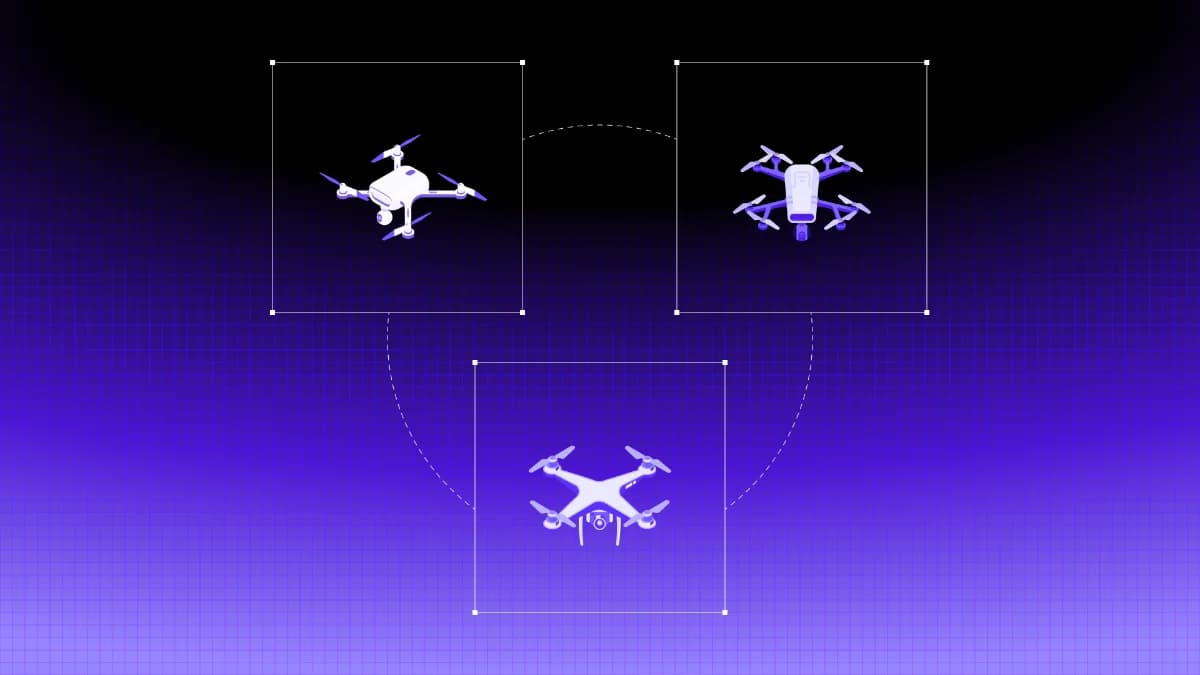
Most enterprise drone programs eventually operate mixed fleets. Different aircraft may be selected for infrastructure inspections, security patrols, surveying operations, or emergency response missions.
Managing separate software stacks for each platform creates unnecessary complexity. A unified autonomous drone software environment enables operators to manage diverse vehicles through a common mission architecture. As fleets expand, this consistency becomes increasingly valuable.
Accelerating Innovation
Innovation slows when engineering teams spend excessive time rebuilding the same functionality across multiple hardware platforms.
With hardware-agnostic drone software, developers can focus on improving mission capabilities rather than repeatedly adapting software to new aircraft ecosystems.
This allows organizations to experiment, iterate, and deploy new mission concepts significantly faster.
The Core Components of a Modern Mission Platform
Mission Design and Planning
Every autonomous operation begins with mission planning. Operators must define objectives, routes, behaviors, contingencies, and operational constraints before deployment.
A modern drone mission management software environment provides intuitive mission design capabilities while supporting advanced automation workflows. Teams can create repeatable mission templates that scale across projects and operational environments.
This approach improves consistency while reducing mission preparation time.
Simulation and Validation
Simulation has become a foundational requirement for professional drone operations. Testing mission behavior before deployment reduces risk, improves reliability, and accelerates operational readiness.
A robust mission deployment platform should allow teams to validate autonomous behaviors under realistic operating conditions. By testing routes, automation logic, and failure scenarios before launch, organizations can identify issues early and improve mission success rates.
Simulation also plays a critical role in moving projects from laboratory environments into production deployments.
Cross-Platform Deployment
The ability to deploy the same mission architecture across multiple platforms is one of the defining characteristics of advanced autonomous systems.
Cross-platform UAV deployment eliminates the need to redesign workflows whenever hardware changes. Mission logic becomes portable, reusable, and scalable.
For organizations managing large fleets, this dramatically reduces engineering overhead while improving operational flexibility.
Fleet Operations and Scaling
As organizations expand from pilot programs to enterprise-scale deployments, fleet management becomes increasingly important.
Modern autonomous drone software should provide centralized mission coordination, fleet visibility, operational analytics, and deployment governance. These capabilities enable teams to manage growing fleets without proportionally increasing operational complexity.
The result is a more sustainable path toward large-scale autonomy.
From Research Labs to Real-World Deployment
University Research Programs
Many breakthrough robotics innovations begin in research environments. University laboratories frequently develop autonomous navigation algorithms, perception systems, and mission planning frameworks that demonstrate impressive capabilities.
However, transitioning these systems into operational environments often introduces new challenges. Hardware compatibility, deployment complexity, and operational reliability become significant barriers. By leveraging hardware-agnostic drone software, research teams can preserve mission architectures while deploying across multiple UAV platforms. This accelerates the transition from experimentation to practical application.
Infrastructure Inspection Operations
Infrastructure operators increasingly rely on drones to inspect assets such as power lines, pipelines, bridges, and industrial facilities.
These organizations often manage diverse fleets optimized for different inspection scenarios. A unified drone mission management software environment enables operators to standardize workflows across aircraft types while maintaining operational flexibility.
This consistency improves training, reduces errors, and simplifies scaling efforts.
Public Safety and Emergency Response
Emergency response organizations operate in dynamic environments where mission adaptability is critical.
A flexible mission deployment platform allows operators to rapidly deploy autonomous missions using whichever aircraft is available. Mission templates, automation logic, and operational procedures remain consistent regardless of hardware availability.
This flexibility can significantly improve response effectiveness during time-sensitive operations.
Building Future-Proof Drone Programs
Prioritize Mission Portability
Mission portability should be treated as a strategic capability rather than a technical convenience.
Organizations that build operations around cross-platform UAV deployment gain the ability to adopt new technologies without disrupting existing workflows. This reduces migration costs while improving long-term agility.
As the drone industry continues evolving, mission portability will become increasingly valuable.
Adopt Simulation-First Development
Simulation-first workflows reduce deployment risk and improve operational reliability.
By validating autonomous behaviors before launch, teams can identify edge cases, optimize performance, and increase stakeholder confidence. This practice is especially important for organizations operating in regulated or mission-critical environments.
The combination of simulation and hardware-agnostic drone software creates a powerful foundation for scalable autonomy.
Design for Fleet Growth
Many drone programs begin with a small number of vehicles before expanding into larger operational fleets.
A scalable OEM drone software platform should support this growth without requiring major architectural changes. Organizations that invest in flexible mission infrastructure early often experience smoother scaling and lower operational costs over time.
Future growth should be an architectural assumption rather than an afterthought.
Frequently Asked Questions
What is hardware-agnostic drone software?
Hardware-agnostic drone software is a mission layer that operates independently of specific drone manufacturers or aircraft models. It enables organizations to design, validate, and deploy missions across multiple UAV platforms while maintaining consistent workflows. This flexibility reduces vendor lock-in and improves long-term scalability.
Why is cross-platform UAV deployment important?
Cross-platform UAV deployment allows organizations to reuse mission architectures across different aircraft platforms. Instead of rebuilding workflows whenever hardware changes, teams can maintain operational consistency and accelerate deployment cycles. This capability becomes increasingly valuable as fleets grow and diversify.
How does a mission deployment platform improve operations?
A mission deployment platform centralizes mission planning, validation, deployment, monitoring, and optimization. By providing a unified operational environment, it reduces complexity and improves consistency across missions. Organizations can deploy autonomous workflows faster while maintaining higher reliability.
What makes an effective OEM drone software platform?
An effective OEM drone software platform supports hardware flexibility, simulation, security, deployment scalability, and ecosystem integration. It allows manufacturers to deliver mission-ready capabilities without requiring customers to adopt rigid hardware ecosystems. This creates a more adaptable and future-proof solution.
How does autonomous drone software support fleet-scale operations?
Autonomous drone software enables organizations to automate mission execution, coordinate fleet activities, and monitor operations from a centralized environment. As deployments expand, automation reduces operational overhead while improving consistency and scalability.
Conclusion
The future of autonomy will not be defined by hardware alone. Organizations increasingly require mission architectures that can adapt, scale, and evolve alongside changing operational requirements.
By adopting hardware-agnostic drone software, operators gain the flexibility to deploy missions across diverse platforms without sacrificing consistency or efficiency. Combined with a robust mission deployment platform, advanced autonomous drone software, and seamless cross-platform UAV deployment, organizations can accelerate innovation while building a foundation for long-term operational success.
For teams moving from research, pilot programs, or isolated deployments toward fleet-scale autonomy, hardware-agnostic drone software represents one of the most important investments in creating resilient and future-proof mission operations.